Blog, Creative Shorts, New Writing

Red Rock

All I actually remember of that day was that the morning was bright and clear, but by evening the storm had changed everything. What happened in between, I have pieced together from the disconnected threads of my memories, family stories defended at holidays and rumours whispered in the village shop, after church and at school.

We had not been at Red Rock long. A few months, at most. The island, contrary to its name, was not red. It was the lighthouse base that was built of red brick and rose out of the cliff edge like it had grown there as naturally as the trees and rocks that surrounded it. The base was a two-story fortress with a total of twenty small sea salted windows that would never be clean; the only way to really see out was to open them, exposing the room to the heavy damp. The tower was a similar red with the addition of white bricks; it marked the end of the island like fairground sweet. Inside the tower there was a spiral staircase that stretched from the basement to the lantern room where there were two galleries: the main lantern gallery and a watch gallery just below. We were never allowed on either gallery. No one except Pop was allowed to the very top. Pop couldn’t bare it if something had happened to us, after losing Mama and all. That’s what Margaret said. But Pop only pretended to listen to Margaret and when she went to the mainland for supplies, Clarise and I raced up the spiral stairs to the lantern room to watch out for ships until she came back and we were under our stepmother’s thumb again.

That morning, the sea was unusually calm and the sky a deep blue with only a few strands of white cloud that stretched across the from one side to the other like white rainbows. Clarise and I played around the foundation of the tower. It was only out of the corner of my eye that I would ever see him. A shadowy figure always disappearing. Pop said the island was filled with stories of lighthouse keepers past but they were nonsense. He didn’t believe in anything. Not after Mama. There was no God. Margaret was always quick to counter, saying that it’s important to have faith. She never said what to have faith in, but whatever it was, Pop was only interested in keeping the faith of the lantern – that’s what he was hired to do. But when you’re ten, you see everything. And I saw a shadowy figure. Clarise, a year younger, always listened to her older brother. It was a given and if I saw it, she saw it.

Someone had come to the door that day, a man in a suit, and had an argument with Pop. Their voices were raised and coarse as they stood in the doorway; Pop wouldn’t let him in. The man’s car was noisy and rattled as he drove away. Margaret baked a carrot cake – she had opened the window and the fruity sweet smell seeped out and mixed with the salty taste of the air.

Mrs Reynolds from the village shop said that Pop went after him. I don’t remember that. Pop closed door. Or was it the man’s car door that had closed? It’s hard to tell when the wind gets up and as they argued, the wind had grown stronger. I know because our ball rolled farther away. Or did it roll farther away because Clarise had given it a good whack because I wasn’t paying attention to her?

Clarise and I ran after the ball. We could see the road winding in and out of the trees as we approached it. And on the road, I saw the car, the man’s car appearing and disappearing through the trees. Mrs Thatcher, our schoolteacher, said it was Pop’s car. Both cars were dark blue, the man’s was rusted but could I see the rust from where I stood? I don’t remember Pop getting in his car, but the sky had darkened, and it had started to rain. Clarise wanted to go inside. She kept pulling my arm. I pushed her away and she fell in the mud. She cried. I told her I had to get the ball. I didn’t see her leave. I thought she’d wait for me. Margaret said she couldn’t find Clarise. But I was sure she could see us from the open window. When I returned, the window was closed. She said she couldn’t see us through the closed window – that’s what she told the police.

I walked back alone, shouting for Clarise as the rain grew heavy and my voice was lost in the growing storm. Father Vincent said he saw me sitting on the church wall. Did I stop to sit on the church wall in the storm? Did I walk that far? I remember the shadow that grew closer to me as I returned to the lighthouse. I remember hearing the crash. Everyone remembers hearing the crash. The fire rose from between the trees and even the storm did not dampen its intensity. Where was Clarise? Father Vincent said he helped me into the church. I do not remember being in the church. I remember holding the ball. The muddy ball. It was cold in my hands and my fingernails were caked in mud. I can still see my muddy fingernails. Was I chilled because I sat in the church? I remember shivering and the shadow grew so close to me that I could almost touch it.


All pictures and writing are my own unless otherwise credited. Permission must be obtained before any image reproduction and credit must be issued in any image reproduction or quotations. 

Blog, Creative Shorts, New Writing

The Phantom

It was an early morning in spring. But it could have easily been midwinter. The fields were covered in a thick frost and a gauzy fog hovered above the ground, stretched thin in long layers and blocked out the dawn. If I waited, the sun would eventually burn through the fog, however, there was no time to delay, she would have the paddle steamer fired up and ready to go. One thief alone – always caught, two thieves – disappear like ghosts.

The frost melted around my canvas trainers as I ran; it formed an undulating water mark of dark blue and my toes were cold even though I had started to sweat in the thick mac. The further I ran into the fog, the thicker it became and before long, it surrounded me. I stopped. It’s always best to stop when you are not sure. Take stock…you know, take a moment and think. If you panic, the answers become blurred. And when you need answers, you need to be clear headed. That was one of my strongest qualities. The ability to think clearly when everyone else is lost in hysteria.

Standing still made my feet feel even colder and wetter. The fog cut close to my face and as I breathed it in, the damp hung in my lungs, seized its membranes, and forced me to take suffocating short, quick breaths. Cold induced asthma took hold, but I stuffed my hand into my coat pocket and pulled out my inhaler. I sucked in two quick puffs and closed my eyes waiting for the drug to work. Slowly, my chest eased, my lungs were released from the freezing fog. I replaced the lid and pushed it back into my pocket and grabbed hold of the silver compass. It was attached to a silver chain, but I had refused to wear it, it was Mother’s and wearing it somehow seemed wrong. I pulled it out. It was cold, the kind of cold where you couldn’t tell if the silver was burning or freezing in the palm of your hand. I rubbed the compass with both hands to get it started; the sapphire set in the centre of the radiating sun rays glowed. I clicked the catch at the bottom, the lid popped open. I watched the arrow spin and then headed due south.

I was slightly off course, but not too far. As I neared the river, my shoulder ached with the weight of the satchel and the leather cut into my collar bone. I had slung it over my head and diagonally across my body so it wouldn’t fall off. I could never carry the school satchel on one shoulder; the strap would always slide off my narrow shoulders. But now, it wasn’t filled with my computer, books, or a pencil case. I carried silver, and silver was heavy and necessary; it was the only chemical that could link the compass with its originator. The brown leather bulged and was held closed by only one of the straps. The other, flapped freely as I followed the compass.

I heard the chugging of the paddle steamer but saw nothing; it was a whispering ghost waiting for me. As I neared the river, the fog thinned, and I caught the glint of gold at the very tip of the bow. If you weren’t looking, you would miss it. The rest of the steamer was veiled in a ripple vacuum, but I knew the small red outline was there, with the paddle wheels at the stern and the smaller thin wheel on the port side. It was as if a small wooden train engine was set in the hull of the boat; it had a small deck at the front and stairs up to helm.

“Run!” Ornella allowed her voice to break through the vacuum.

I looked behind and could see dark shadows growing larger in the fog. There were at least three. I snapped the compass shut, held it tightly and ran towards her.

“Hurry sister!” she said.

Ornella was older than me at fifteen, but only slightly, by ten and a half months. However, that ten and a half months meant the difference between giving orders and receiving them. The compass pointed me directly to the small port side paddle wheel; I trusted in the compass completely and launched myself over the river. Ornella pulled me up onto the deck.

“Let’s go, Odinia!” She shouted as she jumped up to the helm and pushed the steamer into action; it rumbled underneath my feet and we were off.

The shadows had slowed. I knew they couldn’t see anything. I watched as they faded into the fog then joined Ornella at the helm. Dropping the satchel behind her, I sunk into the folding chair by the fire and slipped off the canvas trainers and hung my wet socks over the arm of the chair to dry. Ornella was strong and serious, when she turned and looked at me, she smiled but I knew as soon as her back was to me, her mouth would be drawn in a tight, thin line piloting The Phantom to our next heist.


All pictures and writing are my own unless otherwise credited. Permission must be obtained before any image reproduction and credit must be issued in any image reproduction or quotations. 


Blog, Creative Shorts, New Writing

The Witching Lake

It was our first summer at Lake Roake.

The white sands that surrounded half of the lake’s shore made you think you were in Hawaii rather than England; actually, it was probably somewhere near Lincoln. The lake, a giant crater, wide and deep, was surrounded by trees that kept its secrets from leaking beyond the wooded perimeter. The far side of the lake was so far it almost felt like an ocean when the sun set in the distance and obscured any hope of seeing the faint image of the wood opposite. Pinwheel roads that jutted out from the lake were mostly hidden by the trees, but when you reached the end of each road, the view opened and the white sands dared you to cross as the lake beckoned with glittering reflections, in the day – of sunlight, and in the night – of moonlight.

Mum had specifically avoided holidays near water after the time we rented a cottage with a tidal river at the end of the garden and no fencing. Nightmare, just a nightmare, was all she said for the whole two weeks, who would rent this house to a family with toddlers? I kept having to tell her to forget about it and that if we went now, the law about access to water with children around had probably changed anyway. The twins were now seven and knew how to swim, old enough according to Mum for a summer holiday by the lake. Mum spent the week before in a frenzy of list making – beach towels, beach chairs, goggles, swimming costumes, sunscreen, sun hats, picnic basket, floats – you name it, and Mum jammed it into the car.  

“A summer of bliss,” Mum said smiling as we finally drove east with the car piled high.

Dad was meeting us at the cabin after work. Mum said that he would be in and out all summer commuting to work; she felt we needed a car as well, justifying a two-car holiday for one family of five. For me, it meant that I was able to sit in the front, away from Isla and Lynn, and control the music from my phone. I was twice their age and the gap between us grew larger each year.

“Rosemary, turn that off now and read me the directions from the owner.” Mum handed me her phone. “Look in my mail – Ameila Waterbone.”

I scrolled and found the email and read: ‘It’s the largest lake in the area. Fresh water with the power to magically heal. It’s what remains from the formation of glaciers hundreds and thousands and thousands of years ago.’

“Rosemary, please, the directions? She said the post code doesn’t take you to the right place.”

I scrolled down and read: “For the southern approach – take the ring road counter-clockwise to the east exit to Hill Street. Pass Lake Roake Park, pass Madison’s Farm Shop and the boat launch and there…there it is.” I said pointing at our cabin. It was not so much of a cabin but a large house with a porch and a view with access to the lake.

Isla and Lynn jumped out and Mum screeched after them laying down the rules for the lake. “Don’t go off of the porch without an adult. Don’t go on the sand without an adult. And don’t for any reason, and I do mean any, go in the lake without an adult.”

I started hauling in our luggage. It was less altruistic and more selfish; I figured if I helped unpack, I’d get to choose the best room. I was right. Mum was pleased and I chose the room at the front of the house that looked out onto the lake; the best part was the balcony, something Isla and Lynn weren’t allowed to have – they might fall out, or jump, basically Mum found it a problem for them as they were just ‘so unpredictable’ in her eyes.

I took my journal out of my bag, opened the door and stepped outside to take in the view. My journal does not document my life or have any deep dark secrets, not really, just words or thoughts. And so far, this lakeside holiday was pretty good. I wrote:

Arrived at Lake Roake. Sunny and warm. Bedroom at front of house. Bed has a yellow and pink patchwork quilt. Balcony. View of white sand and lake. Imagining I’m somewhere exotic and far away. Feeling good. Not at all jittery. Only three lies so far today. But it is still early in the day.

I count my lies. There’s nothing to it. I just like counting them. Most people don’t even know when I’m lying and sometimes, I make a column for lies people recognise and a column for lies they don’t.

I opened my suitcase. I had decided to live out of my suitcase. At least to start. I didn’t want to waste a minute of the sunshine. It could change so quickly. I put on my bikini and a beach dress. I pulled my dark hair up and piled it on top my head as I slipped on my flip-flops. I slung a blue and white stripped beach bag over my shoulder. I had already packed it with sunscreen and a towel. I grabbed my phone and water bottle and headed out to the sands. Isla and Lynn were already parked in front of the iPad and didn’t see me leave. I closed the front door quietly and felt the freedom of the lake calling me.

The trail was easy and led directly from the house to the sands. To the left and to the right, not a single soul could be seen. Maybe tourist season hadn’t started yet, I thought. Mum had said that the lake was one of the less visited, hence why we could get such a good location at late notice.

As I walked, I let the pure white grains sift over the top of my feet; they looked like strange sand creatures from a science fiction movie. The water at the edge of the lake was a deep blue almost as pure as the sand. I videoed my feet, the sand and the water. The edge of the lake seemed shallow, and there was no tide, it just seemed to heave or pulsate towards the centre. I put my phone and water bottle into my beach bag and let the bag drop to my feet, then I slipped off my dress and left it on top of the bag. Security. Someone would have to move my dress before they stole my phone. An effort.

It was only three steps to the lake; I approached slowly. No, I approached cautiously. As I stepped into the water, allowing the coldness to flow over my toes, a boy’s voice screeched at me, “NO! GET OUT!”

I jumped back and dislodged the white sand sending it flying as I fell backwards.

“What are you doing?” he demanded.

“Hey. What’s the big idea?” I said brushing the sand off of the palms of my hands. “Has there been a chemical spill or something?”

“No. Don’t you know? They’re supposed to tell everyone.” The boy said.

“You’re crazy.” I said standing up and headed towards the lake.

“You can’t go in the lake.” He said and moved to block my way.

“Back off.” I said stepping around him. But he moved again. His blond hair fell in his eyes as he formed a barrier between me and the lake.

“As I said…” He spoke very slowly and calmly and pushed his hair off of his face. His dark eyes were wide and serious. “You can’t go in the lake.”

I pushed him out of my way and as he fell, I quickly walked around him. Before he could stop me, I marched into the lake up to my knees but jumped backwards almost immediately. The water was icy – icy like a snowy mid-winter day. The blood in my veins ran cold and it gripped my heart. But it was not the cold or the pain that tightened in my chest, it was what I saw in the middle of the lake. She was there, in a small boat, just for a moment.

“Are you okay?” He knelt next to me. “Look, I told you not to go into the lake. I saw…I saw you arrive with your Mum. Why don’t I help you back to your cabin? They should have really told you.”

I blinked. There was nothing there. On the lake. No lady. No boat. I let the boy help me to my feet. It made no sense.

“What’s out there? On the lake?” I asked him as I picked up my dress and threw it over my head.

“Nothing’s out there on the lake. It’s what underneath.”

I hitched my bag over my shoulder, I said, “What’s underneath?”

“Look. No one goes in the lake.”

“That’s stupid. We’ve come here for the summer and can’t go in the lake? We’re going to roast in our cabin. No pool. No lake. Nothing.”

“The risk is huge if you swim in the lake.” He said. “Look. It all began a long time ago. But you know what happens if I tell you a story and then you tell it to someone else. It changes a little bit with each retelling, however, even if the details have changed over the centuries, it’s still about love and death, you know. There was a lady, in a time before all of this, who was in love. And as you’d imagine, it was a tragedy; she lost her love. But the anger that followed, well, was unlike any anger anyone had known, and festers will all of the bodies that lie at the bottom of the lake.”

“That’s crazy.” I said but even as the words came out of my mouth, I wasn’t so sure.

“Look, hundreds of people have drowned here. And all I’m saying is don’t be a statistic for this summer. There’s a pool in town.” He said holding out his hand. “Evan. Maybe we could go together?”

“Rosemary.” I said taking his hand, shaking it tentatively and vaguely agreeing. “Alright.”

The pool would be warmer at least, I thought. Evan ran off before we reached the end of the path to the cabin.

I pushed the door open and Mum was talking to someone in the kitchen.

“Hey.” I said as I entered. “I met this kid called Evan and we’re going to check out the pool later in the town. Is that okay?”

The lady stopped mid-sentence and Mum said, “Rosemary. That’s not funny. Who told you to say that?” She turned to the woman in the kitchen. “Violet, I am so sorry. I don’t know what to do with her sometimes. Since the accident, well, the lies are just continuous.”

“I’m not lying. A boy called Evan told me not to go into the lake.” I insisted.

Violet stood up. “I think I’d better go.” She said as she shook her head at me.

“Rosemary, this summer is a chance for a new start.” Mum said as Violet left.  “I thought you said that you would try?”

“I am trying.” I insisted.

“Then set the table and stop lying.” She said as she handed me two plates.


All pictures and writing are my own unless otherwise credited. Permission must be obtained before any image reproduction and credit must be issued in any image reproduction or quotations. 


Blog, Creative Shorts, New Writing

Ys of Brittany

When the gates of Ys were opened,

and the city consumed by the sea,

its beauty, a secret, lies in wait,

for the first to hear the church bells ring

and there to rise as king.

The journey to Brittany had been uneventful. We arrived at the port early, queued, had the buffet breakfast with hot chocolate and then spent the rest of the journey in our cabin watching movies as the engine drummed the ferry through the low waves. As usual, there was some who didn’t know how to lock their car without the alarm and as the ferry rocked, car alarms sounded, and as usual, Mum cursed the owners, asking how hard was it to look up a video on the internet, but with earphones in, I could hardly hear them.

The drive from Saint-Malo hadn’t changed over the year. The towns and coast were familiar and comforting like an old, warn sweater. Our house was not really a house, but rather an ancient grey stone villa with turrets and a tower, set high on a cliff top in much need of renovation. Jaded, Mum had said, preloved. But the thick dust on surfaces that we had not covered with old sheets at the end of last summer told another story. Each year, I discovered something new about the house, like it was waiting for me to be old enough to know its real secrets. The house was far too big for just Mum and me, but it was an investment, she insisted, for us girls. An investment that would take decades to realise, if ever, as she insisted on doing the work herself over the summers.

You’re going to love it, she’d say, when it’s done! And when would that be? I’d reply.

Every summer it was the same. Every summer she discovered something new that needed to be fixed and added it to the list because over the winter, the house would give into its age like a degenerative disease so that in the summer when we took one step forward, the house had already taken two steps back.

I couldn’t argue about the view. Sunsets, when it wasn’t raining, were spectacular. But that wasn’t very often. Mist, fog and rain were as staple as milk, bread and cheese. If anyone approached by boat in the fog, they were doomed to crash into the rocky base of the cliff; I was sure that numerous boats sank just below with the crews sacrificed to the grindylows who would drag them under with their elongated, sinewy fingers to become sea ghosts. On clear days, you could easily see the boats coming.  There was no hope that they’d be able to dock at the cliff base and would have to sail along the coast to the village.

Being a teenager this year, I was sure things would be different. And they were. I had to do more work. Mum said that my first task was to clean out the room at the end of the long hallway on the left and she would start in the first room on the left. There were twelve rooms in total. Five on either side of the hallway and two at the top of the house. Eventually we’d meet and clean the middle room together. It was a cute idea, but when I opened the door of the last room, I realised the huge task ahead. This would take most of the summer.

The room was damp, even in the July heat, with four rickety single beds in dormitory style and motheaten bedspreads that did not match – patchwork quilts of reds, oranges and yellows jarred with the blue-green wallpaper of flowers and birds. The wallpaper was torn at its joins and in some places, pieces were completely gone revealing the plaster work beneath. Mum had given me a bag containing: cloths, polish, window cleaner, bin bags, adaptors as well as a mop and bucket and a hoover. She had packed two in the car this year and I thought she was crazy, but perhaps she did not underestimate the job at hand.

Under the windows, which spanned the length of the wall, were three low, long bookcases. That was the best part of the room. I took one of the adaptors out of the bag attached it to the hoover and plugged it in to a dodgy socket; the hoover roared to life. I detached the arm and sucked up the dust on the books with the end of the hose. When I’d just about reached the end of the row, an envelope flapped out from between the books and jammed against the hose, the hoover struggled to suck it down and the flat of the envelop puffed in and out like lungs expanding and contracting.

I slammed the off button with my foot and silence returned to the room. The envelop fell to the ground with the loss of suction and lay partially open at my feet. I rested the arm of the hoover on the wood floor and picked up the envelop. It was yellowed and the edges were disintegrating, like the rest of the villa. I removed the letter; it was three pages and began: Dearest Daughter and was dated: 1820. I shivered and suddenly felt like an intruder in someone else’s life. The writing was hard to read, and I moved closer to the window for better light. The letters were small, and the cursive writing in italics was a mix of English and French. My French reading was very bad, so I tried to make out the words I could: regret, obliged, reluctant and weeks. On the second page, there seemed to be a warning: beware, below the sea, flooded, dam. The more I looked at the words, the clearer they became, and on the final page it seemed less like a warning but more of an invitation: paradise, beautiful, secret, waterfall, lake, ancient, regenerate. It was signed: Your Loving Mother with a postscript in bold capital letters that I could easily read: Find the keys, trust your heart, follow your feet and seek the eternal: Ys.


All pictures and writing are my own unless otherwise credited. Permission must be obtained before any image reproduction and credit must be issued in any image reproduction or quotations. 


Blog, Creative Shorts, New Writing

The Hills

I didn’t want to visit the old man. Every summer, at the end of August we drove from South London to Oxfordshire. The Chiltern Hills! – my mother would exclaim every time as we transitioned from city to country living. Like the hills were something new and majestic rising up out of the earth, a surprise every summer. Just look at those rolling hills – it’s really something, she would say nodding at me to acknowledge the awe of the countryside. Under her breath, she would whisper, breath-taking, just breath-taking. And, like every year, I’d nod, draw my knees up to my chest, rest my flip-flops on the leather seat of the car and put my nose in my phone. My friends would post about holidays abroad: Barbados, South Africa, Madagascar. Me. Some lousy hills outside of London with the old man.

The house sat in acres of land and was always cold and damp, even in summer. It had been raining and the old man greeted us in his wellies and mac. He wore a coat, even in the heat of the summer. It wasn’t a farm but there was more land than you could ever imagine living in South London.

“Come in. Come in.” The old man said. “Tea is ready. Carrot cake from ‘The Tea Cosy’ too. Best in the village.” He hadn’t changed. His salt and pepper beard tidy but with a hint of scruff.

“Dad. You know we talked about this.” Mum said.

I looked from Mum to the old man. Some secret pact had occurred. She knew I wouldn’t come if I knew I’d be on my own with the old man. She took my suitcase out of the car and put it on the gravel.

“I’ll be back next week.” She said giving the old man a hug.

“Mum!” I whispered through gritted teeth as the old man took my suitcase into the house.

“I have to work this week. It’s only a week. It will go quickly and before you know it, I’ll be back, and we’ll have the whole next week together.”

A week alone with the old man. A week where I could be lying on a sun lounger, drinking mocktails, swimming in pools, getting my nails done, or a hundred other things. Mum’s car sped off and I was left alone with the old man.

“You’ve come at just the right time. We’ll have the tea when we get back.”

“Mmmm.”

“The blackberries are calling.”

“Mmmm.”

“Here, you can’t go over the hills in those.” He said pointing at my flip-flops and handed me some wellies. They must have belonged to the old lady. I zipped open my case and pulled out some socks. The wellies were a bit tight; the old lady must have been small. Smaller than a fourteen-year old. I caught sight of myself in the mirror. Shorts and wellies.

“Let’s go.” He said shutting the door.

“Aren’t you going to lock it?” I asked.

“Who’s going to steal anything way out here? Anyways, I haven’t got much to steal.”

Well, I had, I thought. I had my computer, my iPad, my jewellery and clothes all neatly packed in my case ready to steal.

“Please can we lock the door?”

Reluctantly, he took a skeleton key off of a hook by the door and tried to turn the lock. It was stiff but eventually he shifted the catch and the door locked. He slipped the key into his shirt pocket and picked up two large tin pails and pointed at the other two for me. I carried both in one hand and my phone in the other. Reception came and went, and eventually I gave up and pushed the phone in the back pocket of my shorts and carried one pail in each hand.

We walked for what seemed like hours. Along tracks and through fields. The damp remnants of the rain evaporated into the afternoon sky and I wished I’d brought my water bottle. Fresh air, he kept saying, nothing like it, does a world of good. It was hot and my feet sweated in the wellies.

“Watch out for the fairies.” He said as we approached a small bridge over a stream. I laughed. He thought I was five.

“Sure thing. I’ll watch out for the fairies.” I said laughing.

He talked a lot about fighting in the war. Flying spitfires. He was an ace, he said. He talked of his sweetheart. Before the old lady. The love of his life. She was a spy, he said, the best there was. Infiltrated the enemy and helped win the war. Killed in action, sadly, sadly, he would mutter shaking his head. I guessed the old lady wouldn’t have been so happy to hear that his ‘sweetheart’ was the love of his life. The more we walked, the more he talked about the war, getting shot down in enemy territory and being a prisoner.

He stopped. There were briars as far as you could see. In between the prickly shrubs, blackberries hung heavily. He picked several and filled his mouth. The black juice stained his fingers and lips with blood wine stains. He reached out and started filling the first tin pail.

I stepped closer to the briars. Nettles scratched my ankles and I was glad for the old lady’s wellies. I pulled one of the thick blobs off and popped it into my mouth. The sweet juice exploded. I picked another and another. My fingers grew mottled and sticky. The old man hummed as he picked. He must have been hot in his mac. I wished I had put on sunscreen and in between picking, eating and filling the pail, I paused in the small shade of the bushes. I filled one tin quickly, ignoring the thorns that pricked the skin of my arms, my blood mingling with the purple blood of the blackberries.

The old man stopped humming. I turned just as he tilted over, still holding the pail, like he was suddenly shot, blackberry juice dripping from the side of this mouth. He landed with a thud in the nettles and brambles.

I dropped my pail. The blackberries spilled out onto the weeds and grass.

“Grandpa!” I shouted. His eyes were wide and his face stiff. I shook him but there was no response. I ripped my phone out of my back pocket. There was no reception.

“Help!” I shouted. “No! No!”

We were in the middle of nowhere. I pulled the skeleton key out of his shirt pocket. I started to run, key in one hand, phone in the other. The wellies slapped against my calves. Through the fields and tracks and as I reached the fairy bridge, my wellie jammed between the planks of wood and I tripped. I held tight to the key, but my phone landed in the stream. Leaning over, I pulled it out and let the water drip off as I continued running.

The greens of the hills blurred until the house came into view. I shoved the key into the door. It stuck. I couldn’t shift the catch.

“Open, damn it.” I said and wished I hadn’t made him lock the door. The latch shifted. As I called an ambulance, I caught sight of the tea on the table, the carrot cake from ‘The Tea Cosy’, three place settings, the water in the kettle, waiting to boil like a still life painting. Hurry, I said as much as to the emergency operator as to myself. I closed the door, and left the key on the hook and the door unlocked.

It felt like I was gone a long time. It couldn’t have been that long. But the sun had shifted and when I returned, Grandpa and the spilled blackberries were withering in the sun. The flesh of the once plump blackberries, broken, spread out in the grass rotting. The sweetness seeping into the ground, the remains, sour. And Grandpa, lying still, as if part of the earth already.

Inspired by: Blackberry-Picking by Seamus Heaney


All pictures and writing are my own unless otherwise credited. Permission must be obtained before any image reproduction and credit must be issued in any image reproduction or quotations. 


Blog, Creative Shorts, New Writing

Underground

She had a plan. That’s how it began. We had sat in silence for some time when she leaned over to me and said, she had a plan. No one could possibly guess the thing she proposed we do. At first, I thought she was funny. I smiled. I even laughed out loud. But as she kept talking, I realised that she was as far from funny as you could get. She insisted that the fact that we were strangers made it all the better, me wearing a cheap dress and her, a school uniform – a generic blazer and pleated skirt.

I would do it. What else are you to do when you’re put on the spot?

Now, anyone would have thought meeting a stranger in the train station and agreeing to do anything was mad. The madness, I think and still believe, was with the stranger and not myself. It was only my curiosity that led me to agree in the first place. And curiosity is not madness. It’s not madness at all, is it?

This particular train station was deep underground. The arched walls were high and carved out of the rock. There were no tiles or plaster to lessen the feeling that you were deep underground. As you descended the steep escalator, the air changed about halfway, a noticeable shift from the fresh, dry air above to the damp, chilled earthy air below. It latched onto your skin and as you breathed in, it felt as though you were taking part of the earth into the core of your lungs.

When I had reached the platform, a mottled blood-red laminate stretched for as far as the eye could see and disappeared at the far end of the tunnel. Two parallel lines of dark grey pillars, like soldiers, held up the high rocky ceiling of the tunnel. If I shouted, I was sure it would echo. But I didn’t shout, even though the platform was empty.

The station was illuminated with what appeared to be operating theatre lights that hissed white light and the glare reflected dizzying white spots on the polished platform. Wires, thick as snakes, crawled between the lights. I kept my eyes focused towards the end and found a bench situated between two pillars. I slid the bag off of my shoulder and put it on my lap. I hugged it. Mostly to keep warm. But more because being alone so deep underground was unnerving.

From this position, all I could see was the charcoal tunnel that arched over the tracks; I could not see her until she was almost upon me.

And then it was too late.

Too late to get up. Too late move seat. Too late shift along without being obvious. We sat and waited. Little by little, more people arrived, and I loosened my arms from around my bag. It was then, as my arms relaxed, that she leaned over and said, “I have a plan!”

I should have left then. Moved towards the family with three children, or the businesspeople, or the tourists with their suitcases. But I didn’t move. I listened and nodded. And as it turns out, we did not live that far from each other. In opposite directions, but not far. We would walk out of the station, her to the left, and me to the right. And no one would be none the wiser.

“We could get caught.” I said.

But she was compelling, convincing and certain of her plan. We would walk off the train at our destination richer than when we got on. So, every other car, I grew in confidence, we put on a show worthy of an Oscar. Me doubled up in pain, and her blocking the CCTV with her body, light fingered, on repeat. I was nervous and thrilled as adrenaline flowed through my body. This was not her first time. She was too calm and careful. Too sure of herself from the start.

One train ride. I walked right and saw my reflection in the window of the chocolate shop as I left the station behind me. I was no longer the same girl. I was an accomplice. I was a thief.


Inspired by the Alfred Hitchcock movie, ‘Strangers on a Train‘.


All pictures and writing are my own unless otherwise credited. Permission must be obtained before any image reproduction and credit must be issued in any image reproduction or quotations. 


Blog, Creative Shorts, New Writing

Early Morning at Westbay

I hurled the stone into the sea.

I could have easily hit the girl with it instead. No one would have seen. If the stone was larger, I might have done so. But it was not big enough. There were no beach umbrellas or bodies lying awkwardly on brightly patterned towels forming a pallid landscape.

Westbay waited for the holiday hoards to awaken. For families with small children to stake their claim on a patch of the beach for the day. For young girls and boys run into the tide and skittle along the surface with boards. For ice cream and sodas to be sold by stands perfectly positioned along the beach front.

I searched for a larger stone. Clutching it tightly, I launched it again at the sea. The girl stood behind me. I never liked the beach, too much sand, shingle and salt. And I never liked the girl. Too loose-lipped, dull and dishonest. The girl moved closer, although the seaweed still separated us.

I moved nearer the groyne and picked up the largest stone yet. I tossed it in the air and caught it with one hand as I looked into the green eyes of the girl. I hesitated.

The girl swallowed and took a step back. I watched the girl shift her weight from one bare foot to the other. The cool damp of the early morning gave way to the rising sun and a boy with red baggy shorts ran towards the sea and shouted, “I’m going to be the first one in!”

The boy lifted his knees high, jumped over the low waves and then prepared to dive into the sea headfirst. He disappeared momentarily only to surface floating on his back and skimming the water with his arms and legs like he was making angels in the snow.

The breaking waves grew louder. And each crash begged me to do it, don’t do it, do it, don’t do it. This stone would do it. The shingle shifted with the girl. I just had to catch the girl off balance. I would be judge, jury and executioner.

The wind picked up creating a tinnitus in my ears, and the girl’s protests were lost. The girl was afraid of the beach and the sea and the girl was afraid of me. As I moved towards the girl something caught my heel. It sliced deep and as I lifted it off of the shingle, blood dripped from my heel and pooled in the crevices around the stones.

‘No!’ A woman screamed running from one of the houses that backed onto Westbay. ‘Where are you?’

She was in her robe and slippers. Her robe was open, and the sheer fabric flapped behind her like angel wings as she ran towards the sea.

‘Where are you? Help!’

I watched her run, immune to the pain of the shingle under her feet, and then stop knee high in the breaking waves. Her robe floated on the water and gathered, tangled, around her legs. The girl ran around me towards the sea, and past the woman screaming and dived into the water.

My heel throbbed and as I moved my foot, I caught sight of the sharp edge of the shell that cut it. I picked it up and threw it over the groyne in anger. I limped towards the sea leaving a trail of blood on the pale stones, cursing the girl under my breath.

I stopped beside the boy’s mother. She was crying. I scanned the surface. The boy was nowhere to be seen. The girl surfaced briefly and then disappeared. The sea dragged my feet with each stinging wave and little swirls of blood oozed around my toes.

The girl did not re-emerge. It was a long time. Too long. The girl. My sister. My twin. I let the large stone drop into the water.


Inspired by Ian McEwan’s ‘On Chesil Beach’.


All pictures and writing are my own unless otherwise credited. Permission must be obtained before any image reproduction and credit must be issued in any image reproduction or quotations. 


Blog, Creative Shorts, New Writing

Waste Land

IMG_0643 b

In the hazy summer, the light dazzling jewels, a thousand angels dance in the afternoon. The concrete, a galaxy paved on the ground, extends as far as the eye can see. Glossy stones glimmer in the sun, a sea of refracted light, searing bare feet. Heat waves rise up creating puddles stretched out like silk ribbons just beyond reach, mirages wavering and disappearing when you blink, a game of lost reality.

Almost monochrome, rainbow colours are bleached white and silver. Unrelenting, each wave of heat makes you wish you could turn it off as simply as a flipping a light switch, allowing night to fall, a security curtain, to close the day’s play. The city transforms, time slows to a veiled performance, a slow red bull.

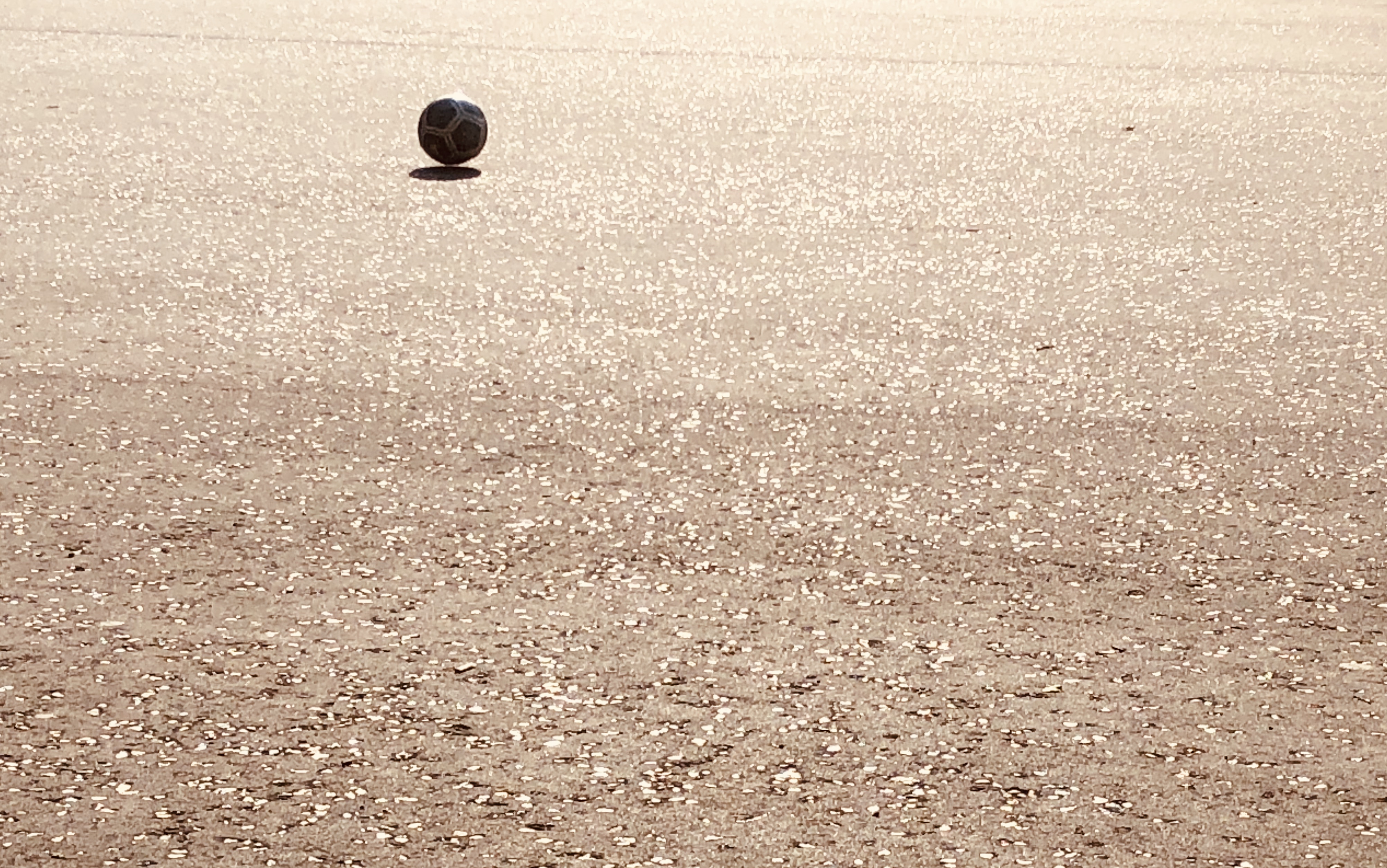
A ball is kicked.

It bounces, crossing the concrete, a lone explorer in a sea of stone. It was time.

I turn away from the ball and head towards the gap between Cannon and Walbrook Street. It was time to leave the mad dogs to the mid-day sun and meet Fletch. When we get back to school in September and you get that inevitable question, what did you do during your summer? Fletch and I would have answers. No exotic holidays abroad, or second homes or climbing mountains. But real, hard evidence of the subterranean secret under our feet.

My face feels red and my freckles would have multiplied in the short time in the sun. I pull my hair up and tied it in a large top knot that wobbles as I walk. My feet sweat in the knee length wellies and the rubber knocks the bare skin of my legs. I look out of place wearing shorts and a t-shirt, a large rucksack on my back and a hoodie in hand.

Fletch is already at the entrance. He is taller than the wooden door and seems to have grown since yesterday, his arms and legs longer, his body wiry. I push my top knot a bit higher to give me extra height.

The secret rivers of London are actually no secret. They, the officials, have tried to excavate some of them, and others have been turned into sewers. Treasures have been found: coins, tools, shoes and even jewellery. But we aren’t after lost treasures of the Roman Empire or bones of long forgotten smugglers.

The air is cooler in the alleyway and we open the entrance and the damp air rises up is actually cold and clashes with the summer heat. I pull my sweatshirt over my head and place my head torch over my top knot like a crown and switch it on. We leave the streets of London behind and descend the ladder until we reach the bottom. The water pools around our ankles.

We are travellers looking for an ancient bronze door in the tunnels, perhaps a splintered landmark. The bronze door of London. A lesson taught for fun in history of the strange and mysterious of London. We go deeper than the tube lines. Deeper than the secret rivers. Deeper than the catacombs. Some say it leads to hell. Others, paradise.

I reach out and run my hand along the mossy wall as we descend; the tunnel is desolate. I thought of how empty spaces can frighten and when you are engulfed in emptiness, you can become hollow. A blank, devoid of meaning and purpose. You become nothing encompassed in nothing.

I shake my head and the head torch flicks from side to side illuminating the tunnel in bursts. These are dangerous thoughts and the waste land tunnel is playing tricks on me already.


All pictures and writing are my own unless otherwise credited. Permission must be obtained before any image reproduction and credit must be issued in any image reproduction or quotations. 


Blog, Creative Shorts, New Writing

The Railway


IMG_0040

From the railway carriage I caught glimpses – a road here and a house there.  Fields. Hedgerows. Stonewalls. Colours blurred. Greys, greens and browns stretched like motorway trail lights. I rested my forehead against the glass; it burned cold. My reflection laced with the hills as the train charged along the track like a soldier in the heat of engagement. As the sun descended, little pieces of my reflection merged with the meadows and drifted away in the wake of the train. Swift like spirits, the carriages cut through the countryside and eventually came to a shrill halt at the village platform of Benson.

Commuters rushed off the train and buzzed away on scooters and bikes or walked briskly flat faced, oblivious to their surroundings and most importantly, unaware that I had loitered.

I walked along the platform towards the setting sun. Glowing white in the centre, surrounded by pale yellows and oranges, it slipped towards the tracks, its golden glory siphoning away any remaining warmth.

The ticket collector emerged from the station shop. I turned and watched as he crammed a large baguette into his mouth. He smiled with his mouth full before disappearing behind the security coded door.

Did he know?

‘You dawdle. Why do you always dawdle?’ Not Mama or Mother. Always Bria. Bria never shouted. Not really. Everything was always said on a soft breath with a harsh undertone leaving an edge that grew, taking control of my mind and heart, creating fissures where none had ever existed before.

The next train would not be long. Twenty, thirty minutes at most. My window of opportunity was closing, and I wished the sun would set faster before Bria knew I was late coming home from school. The electronic sign above the platform flashed yellow letters ‘Next Train: 22 min’.

The damp evening air made the skin of my face feel clammy. I knew it would happen if I stood still. Still like I had been petrified in stone millions of years old. Grandma never lied although Bria always said that she was, in no uncertain terms, off her rocker. But I trusted Grandma more than Bria and was sure they would show. One day. Today? Tomorrow? I know.

For when the sun meets the horizon, and the air numbs your nose, with the rising of the moon, out of their sleep they will stir soon, in a shower of Earthly dust, look to the skies you must, for the Faeries will be on the rise, with shimmering wings they soar like little spies, over houses and over walls, ready to answer your calls.

It’s easy to miss. People look but don’t see.

There, in the distance, along the tracks, glinting and glistening and flickering, closer and closer. Rising from between the railway sleepers, just a minute more for the shimmering to take form.

And the station master’s door slammed shut. I flinched. I blinked. And in that moment the sun had set, and night settled on the railway station.


All pictures and writing are my own unless otherwise credited. Permission must be obtained before any image reproduction and credit must be issued in any image reproduction or quotations. 


Blog, Creative Shorts, New Writing

The Eye of Laertes


IMG_3390

I approach the Eye of Laertes. With a clear turquoise sea, you’d imagine sirens rising up to lure you to a destiny underwater. Well, it’s not like that and there is no ethereal music either. The light emanating from the Eye of Laertes, according to legend, is so strong it burns to death anyone who enters. The overhanging rock is low forming an overhang to the entrance. I turn the boat away from the archway. It’s a small motorboat, but not small enough to fit through the Eye. I rev the engine and the bow lifts off of the water and jumps up and down as I pull away.  Looking over the starboard side, the water near the rocks is a deeper turquoise. I hold the boat steady, then circle and turn it to face the Eye again. I cut the engine. There is a small anchor. I throw it overboard and wait.

I tend not to give much credence to legend. The facts are facts. That’s what they teach us in science anyway. Focus on the question. Research it. Form a hypothesis. Conduct an experiment. Observe. And form conclusions. Pac and I have been conducting experiments all summer. Now, it’s time to debunk the Eye of Laertes.

I hear Pac before I see him. The motor of his boat is clunky and old.

“Got everything!” He shouts. “Hey Mont! You ready?”

As Pac slows, I pull his boat close and use the rope to tie it to mine. It is full of wet suits and snorkeling equipment borrowed – stolen –  from his Dad’s surf shop. Pac’s Dad doesn’t like me. Says I’m a bad influence. We should be doing real work. Not pretend science. We should be getting ready for exams, and not messing about with the boat. But my logbook says otherwise. We’re going to make a great discovery one day. Before we’re sixteen. And be the youngest to submit papers to Scientific Today. I can feel it.

The rocks around the Eye of Laertes form a large circle and the only way in is through the Eye. Or to send a drone up. But pictures from drones that I’ve seen are never clear.

“Definitely ready. Let’s debunk!”

I take out my phone and open the logbook in Notes.

Research Question: Does the light from Eye of Laertes burn a swimmer to death

Hypothesis: Propose light source is strong, therefore blinding and confusing and disorientating a swimmer, thereby resulting in their death by drowning.

Experiment: Anchor outside the Eye of Laertes. Using snorkelling gear and sun reflecting scuba mask, enter water, swim through archway. Explore inner circle of sea and caves. Return to boats and write up findings.

I put my phone in my bag and slide it under the seat. Putting a wetsuit on in a small boat is difficult. I remember to note this for future explorations. We slip on the fins, they’re open heal fins, but should work just fine. We cover our eyes with the mask, fit the snorkel and tip overboard into the sea from either side of the boats. The water is cold, even in the wetsuit.

I adjust my breathing. Steady. Slow. Even. I give a thumbs up to Pac. He returns a thumbs up. I point towards the archway. We start to swim towards the Eye of Laertes. The light is strong, and I can feel the sea warming up as we swim through the stream of light.

When we pass under the overhanging rock, something changes. The light intensifies. It becomes more than swimming in a stream of light. I look over to Pac. He’s pointing forward and indicates for me to go first.

I take the lead. Things to note: light intensifies, water warmer, rock formation around arch reflects blue of the water. No hell fire burning.

Entering the Eye of Laertes, the light obscures the other side. I can’t see the rocks or the sea or the sky and then it hits me. The heat.


All pictures and writing are my own unless otherwise credited. Permission must be obtained before any image reproduction and credit must be issued in any image reproduction or quotations.