
Blog, Creative Shorts, New Writing

Arriving at Midnight

‘But sometimes it takes more courage to live than to shoot yourself.’

~ Albert Camus, A Happy Death

It was nearly midnight. During the whole of the midsummer journey from the train station, darkness hung about the taxi with a destructive intent as the wheels jutted in and out of the ruts of the rough mountain road. Had the girl been alone, she might have shouted at the driver herself, but as it happens, she was not alone. The older woman balanced on the edge of the seat next to her and was incessant with her rant letting the driver know at every possible moment that he would find her dead in her seat by the time she arrived at her destination. Starless and oppressive, the night harboured birds of prey that squawked and cawed as they periodically landed on the glass roof – picking and clawing at their visible but inaccessible prey. Lifting off, they seemed to disappear, but she sensed the flap of their wings and the silences between as they coasted behind. The older woman fanned her hand in front of her face; little beads of sweat had formed on her forehead and her blond, slightly greying hair, grew matted and the strands that had come loose curled into ringlets around her full face. She looked all at once like a small child and an old lady. It was hard to tell at what point she became weepy, but she brushed away the tears and sweat and eventually relaxed back in to her seat, letting her body move with uneven undulations of the taxi as she talked incessantly about nothing in particular.

Internet was sparse and the girl had given up trying to message him. She knew it was useless and was beleaguered by thoughts, inescapable, menacing thoughts that circled her mind like the birds of prey above the taxi. Her agitation grew. Had she misconstrued the situation? Had she viewed it through a singular lens? Had she reached the nadir – the lowest point or was there more to come? The girl wondered if she had the courage to open the door and jump out, relenting to gravity, and allowing the fall down the steep mountain side kill her. Wiping the window with the palm of her hand, the girl tried to see through the blackness and pressed her forehead against the glass. They were quite high up on the mountain side, it would be now or never. As the driver whizzed around the bends of the mountain, she rested her hand on the seat belt release, held her breath and searched for the courage to release it and pull the door handle.

“Would you like a butterscotch? Settles the stomach and the nerves on these windy roads.” The older woman thrust an open pack of boiled sweets at her. The girl took her hand off of the seat belt release and exhaled. Taking a sweet, she unwrapped it and muttered “thanks” as she popped it into her mouth. The rich sweetness alerted her senses and reminded her that she was still alive. Alive to taste. Alive to feel. Alive to smell. Alive, maybe to have the courage to live.

As the taxi reached the crest of the mountain and descended, it took a sharp turn off the main road and ploughed like a juggernaut along the narrow dirt path sending the older woman tempestuous rage again exacerbating her nervous nature even further.

The opportunity to jump had passed as the mountain was now solid on the right side of the car and to the left there was a stone wall illuminated by the headlights. The girl had not misconstrued the situation. This was about as far from home and him as humanly possible. This was nothing less than a banishment. And just when the girl thought that her situation could get no worse, the taxi stopped at the end of the road.

“This is where you get out,” the driver said to the girl.

“Here? There is nothing here. Where is the house?” The girl said lowering the window peering to the front and back of the taxi.

The stone wall curved around to the left at the front of the car along with a dirt path that was illuminated by a sole streetlamp. This was the end of the road. Shadows from the dense hedgerow and the few spindly trees that managed to grow on the mountainside extended across the path and reached up the side of the stone wall; the shadows shifted as they caught the summer night wind and gave the impression that someone was lurking along the path. The girl’s depression deepened as her isolation became clear. The driver opened his door, walked round to the back of the taxi and opened the boot. The older woman, who had been so loquacious, chattering non-stop, was finally silent as she pushed the bag with the remainder of the butterscotch sweets into her hand. Sharing the taxi was the only option at this time of night, the chances of another coming along had been slim and while the girl found the woman odious, she now wished she did not have to part ways with her.

The driver wheeled her case around to the front of the car. The girl put the sweets into her rucksack and climbed out onto the verge which was overgrown with plants that pricked her bare legs and left small red welts around her ankles just above her trainers. She slammed the door shut and lifted the heavy rucksack onto her shoulders. The birds of prey reappeared and flew just above the path she was about to take, sending sharp squeals that echoed along the mountainside.

The girl pushed several notes into the driver’s hand, grabbed her suitcase with one hand and her phone in the other and headed towards the illuminated path. She had hardly walked ten paces before the streetlamp faded and the path darkened with the roots that impeded the smooth movement of the wheels of her case. The girl paused as the darkness closed in. She flipped her phone open and pressed the torch icon. Somehow the path looked far more foreboding the white light of her phone rather than with the warm yellow light of the streetlamp. The stone wall and pathway seemed almost monochrome and the girl had a prescient feeling that her death on this mountainside would not be unexpected.

As the girl reached the end of the path, rising up from the mountainside, was the House of Morana. The sight of the house sent an icy shiver though the girl. She felt all at once sick at the sight of the stone towers that rose up from the foundations but compelled to continue to the house that was actually a castle carved and layered into the mountain side. It’s magnificence was both alluring and frightening. From the path, the girl could see at least seven levels and the top layer of the castle appeared to grow out of the peak of the mountain and disappear into the night sky. Built with large greyish-brown stone, coarse trees and gorse grew between layers, the turrets and castle walls created a fantastical layer cake of doom. This house. This castle. The House of Morana would be her ending and her parents would be complicit in her death. As she walked towards the first of many moss- covered stone steps, she embraced the gloom that emanated from the expansive walls of the House of Morana and prepared for this to be the pinnacle of her short life.

Inspired by The Fall of the House of Usher by Edgar Allan Poe and Jamaica Inn by Daphne du Maurier.


All pictures and writing are my own unless otherwise credited. Permission must be obtained before any image reproduction and credit must be issued in any image reproduction or quotations. 

Blog, Creative Shorts, New Writing

The Light of Winter

The Tree of Lux Brumalis was not ancient. In fact, compared to the other trees on the journey, it was decidedly average and hardly likely to enable anyone to access the future. Its trunk curved slightly like a sideways smile that revealed how much the tree had acquiesced to the north winds of winter storms. You would want the tree that held all the answers to give an impression of massiveness and longevity, like giant sequoias or the strength and power of an oak, so it was surprising when we were told of the fragility and ordinariness of the Tree at Lux Brumalis.

When we started out three days ago, I did not know who my companions would be. Once a generation, anyone who turned fourteen on the first day of the year was required to meet just before sunrise on the edge of Terretown with a hand drawn map, food, a hunting knife, a blanket, water and matches in a rucksack.

We were the chosen few who would know what the future would hold, who would be the Decision Makers and who lead our people. I thought we would be a large group – ten, maybe twenty – as people came from far and wide for the pilgrimage. But we were not twenty and we were not ten. This year, we were just two.

Fara had already walked two days from a farm on the other side of Willow Hills to reach the starting point. I had walked down the road. Fara was critical and made cursory comments on just about everything from the coldness of the days, to the hardness of the ground where we slept, to her aching feet. She was quick to pass judgement on the beauty or ugliness of every rock, plant or animal. Her pursed lips and the intense stare of her cold blue eyes added an extra bite to every comment.

There were long stretches of time where we walked in silence, Fara’s dour expression enough to scare off any enemy. She is, what Mama would have described, as a cup-half-empty person. I on the other hand, Mama said, was a daughter she was proud to have as a cup-half-full person. Setbacks were opportunities, failures were a learning process, and good always rose to the surface even in the most wicked of situations. My smile was catching and even if I wasn’t smiling, my brown eyes were warm and inviting. Those were my good points. On the other hand, I avoided conflicts, this Mama warned, would be my downfall if I was not careful.

As a Decision Maker, Fara would be hard to work with, that much I knew from the outset as she seemed to take an instant dislike to me for the short distance I had walked to the starting point and made it was clear that she felt I already had an advantage over her. However, this was not a race. Nor were one of us intended to be greater than the other. There were no winners or losers. We were supposed to bring harmony, coherence and balance as future Decision Makers.

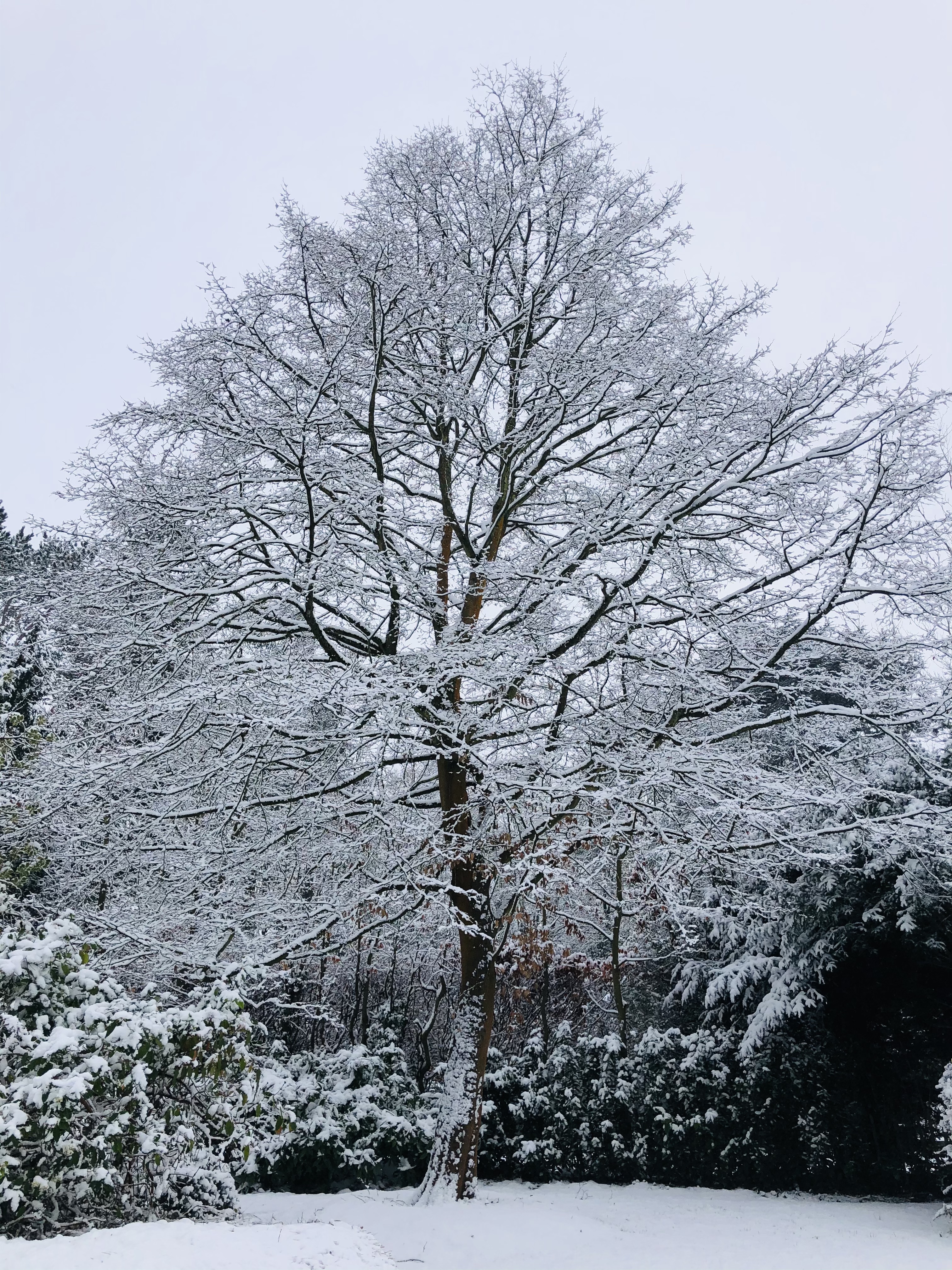
We found the tree of Lux Brumalis in a small clearing surrounded by low level shrubbery just as we were led to believe. But what was unexpected was the brilliance of the snow-covered branches whose expanse glistened against the pale late afternoon sky. The frozen branches formed intricate lacework patterns with a celestial glow that emanated from their tips with a halo-like aura. It was anything but banal.

“I will go first.” Fara stated as she let her rucksack slide from her shoulders and land in the snow at her feet. She took off her gloves and stuffed them into her pockets. I took a deep breath. Mama warned me about this. If we did not pass through in the right order, the order of our birth, we would create a turbulence in the world that would last a generation. I had heard tales of what happened at this point. People who had walked together for days, people who had known each other their whole lives, people who were nothing but kind and caring. People who changed in the sight of the tree. Arguing, fighting, pulling out knives leaving companions bleeding out on the ground feeding the roots of the Tree of Lux Brumalis for the next generation.

“Let me see your wrist.” I said putting my hand on Fara’s arm and held her back. With my other hand, I felt for the hunting knife that hung from the belt of my coat. She tried to pull her arm out of my hand, but I gripped more tightly.

“I’m older. It’s obvious.” She said petulantly spitting her words at me.

Mama said to always keep your voice deep and low in an argument and maintain eye contact. It gave a sense of calm command. I cleared my throat, lowered my chin slightly, kept my eyes locked on hers and slowly said, “Let me see your wrist.” It was hard not to stop my voice from rising. Panic erupted in my stomach and my lunch began to summersault. Tightening my grip on the knife, I clenched my teeth, mostly to stop from vomiting, but my tight lined lips were severe enough for Fara to relent. Did she really think I would use my hunting knife on her? I was in no doubt as she pulled her arm from my hand and pushed up the right sleeve of her coat. I released my knife, pulled off my gloves and stuffed them into my pockets and pushed up my right sleeve.

Tattooed on our wrists was the time of our births. Mine was 00:05. Hers was 13:01.

Apart from learning I was the first born between the two of us, the fact that Fara thought I would use my hunting knife on her meant that I sure that she would use her knife on me.

“Fine. You go first.” She said pulling her sleeve back down. She reached for her rucksack, pulled out her water and slugged it down as if we had just gone several rounds in a bare-knuckle boxing match.

Fara was going to give me a lifetime of conflict. This I knew. In my heart, I knew if from the moment we left Terretown, but I had given her the benefit of the doubt with small talk, niceties, compliments – glass-half-full. Mama had also warned me that while being positive was an admirable quality, being realistic was a necessity. And being realistic meant that I could not let Fara dictate events. As much as I hated conflict, in this moment, our first battle before the Tree at Lux Brumalis, I had won.

I nodded my head at Fara in acknowledgement of our agreement and walked towards the tree with purpose. It is said that some never return, so overwhelmed with what they see on the other side, they’re gutted by their greed and left to rot like stinking fish. Mama said I needed to imagine that I had blinders on like the kind you put on horses, so they don’t get distracted. I had one task. Walk around the tree counterclockwise three times at which point I would pass to the other side. I was to pick up the first gem rock I saw and return immediately, walking clockwise around the tree three times. It sounds simple. But when confronted with a sea of gem rocks temptation can engulf like the deluge of a rogue wave.

I paused under the canopy of the tree as its silver aura penetrated my pores driving the light of winter deep into my soul. I began to circle the tree.


All pictures and writing are my own unless otherwise credited. Permission must be obtained before any image reproduction and credit must be issued in any image reproduction or quotations. 

Bedside Table Reads, Blog

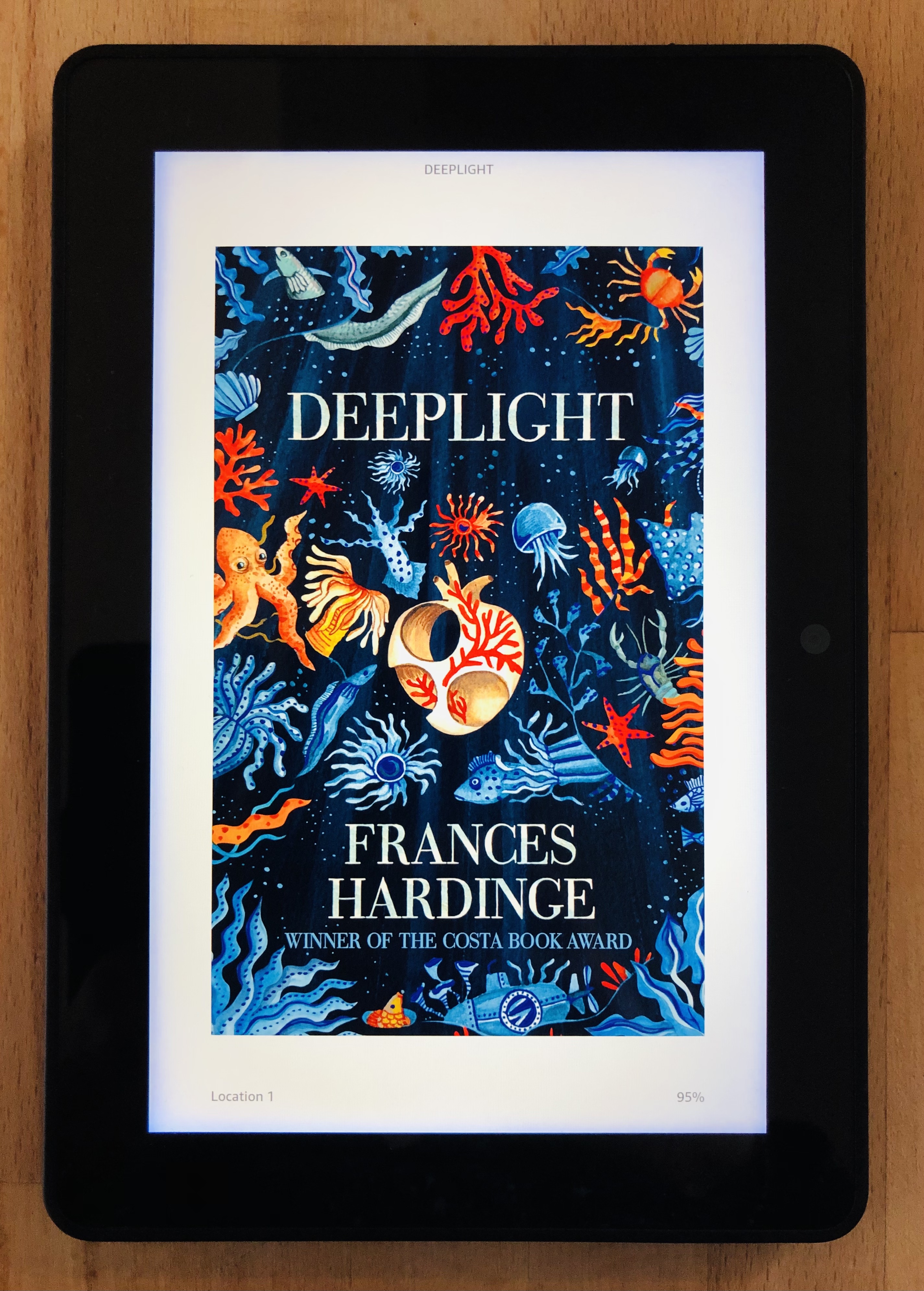
Shortlist Read: Deeplight

This week I have had the great pleasure of reading Deeplight by Frances Hardinge from the YA Book Prize Shortlist 2020. A fantasy set on the imaginary islands of Myriad where the Undersea gods were ‘as real as the coastlines and currents, and as merciless as the winds and whirlpools’. It is here, where the gods destroyed each other in the event known as the ‘Cataclysm’ and subsequently, the fear of the gods has dissipated. The narrative follows fourteen-year-old Hark, orphaned with his best friend Jelt, as they scavenge an existence together on the island of Lady’s Crave.

The narrative is written in the third person and Hark is presented as a storyteller. His skill in spinning a yarn gets him out of more than one sticky situation. His way with verbal language is juxtaposed with the fact that he cannot read. Two years younger than Jelt, Hark is constantly caught up in Jelt’s schemes and is described always being ‘neck deep in Jelt’s latest plan. It was as though he’d signed up for it in his sleep’. The devotion to their ‘friendship’ and seeing Jelt as ‘family’ drives his commitment to Jelt’s schemes but deep down, Hark questions Jelt, his decisions and escapades. This internal friction for Hark is crucial and drives his conflicted decision making throughout the narrative. However, there are certain points where Hark’s unflinching loyalty to Jelt, in the face of emotional manipulation, is so very frustrating.

Hark and Jelt’s relationship is established from the outset where Hark is ‘the follower’ and Jelt ‘the leader’. While Hark protests ‘You never ask, Jelt.’ and ‘You did have time to tell me.’ Jelt contrives an answer that makes it seem like he is attempting to help Hark, ‘I’m trying to show Rigg what you can do, Hark!’ ‘I brought you in because we’re friends.’ The fact that Hark was ‘mollified’ by this compliment indicates the long road he has to be out from under Jelt’s manipulative control. This is furthered by Jelt’s harsh insistence ‘Oh, grow a spine, Hark! Before I start wishing I’d left you out of this. This is a promotion.’ Will Hark ‘grow a spine’? This question lingers throughout leaving the reader to will him to make the ultimate decision to break with Jelt and go his own way. However, even in the face of a dangerous and suspenseful scheme to climb a cliff edge to put out a lantern in the beacon tower, Hark is bogged down by his conscious ‘But I couldn’t leave Jelt in the lurch, could I? He’d be dead without me.’

From the outset, the beacon scheme is somewhat doomed with Hark caught ‘Appraised and sold’ as a slave, highlighting the inequalities within the Myriad society. While ‘slavery was forbidden within the Myriad’ if you committed a crime and were found guilty, you could be sold as an ‘indentured servant’. Hark’s gift of the gab allows him to combine his lies with ‘fragments of truth’ appealing to his audience of purchasers where he is ultimately bought by Dr Vyne. Hark is transported to the Myriad island of Nest ‘a wild, lonely island…almost ghostly’ where he begins a new life in servitude at the Sanctuary. It is a place where ‘young acolytes’ trained to become priests in the past. Hark explains that these priests are ‘The old, crazy ones whose minds broke when the gods died!’ It is also where Hark makes unlikely alliances providing the reader with some rays of hope.

It is as an ‘indentured servant’ where Dr Vyne sees Hark’s potential stating that ‘some schooling would make you more useful to me…I’ll have someone start teaching you your letters’. Even without Jelt, this was conflicting for Hark who was excited to learn to read but replays Jelt’s words: ‘Reading makes your brain soft.’ ‘You live in the world, or you live in a book. You can’t do both.’ trying to understand Jelt’s idea that ‘illiteracy was a badge of honour.’ The reader is buoyed by Hark’s change of situation away from Jelt, albeit, an enslaved situation. Hopeful that after three months on Nest, Jelt was well and truly out of the picture, however, like a boomerang, Jelt returns with one more scheme. It is this savaging foray that sets off a series of events compromising Hark and forever changing Jelt. This nail biting turn of events leaves the reader on edge and slightly seasick.

Hardinge’s successful world building conveys the Myriad islands and the gods as if they have always existed enabling the reader to suspend any notion of reality slipping into the fantasy world of the Undersea, gods, godware, smugglers and priests with ease. The prose is cleverly crafted and rich with original similes, ‘The sun was as pale as a poached egg’ and ‘Nest’s harbour was a little more than a bare bay, curving like an empty melon rind’. Hardinge expands new notions, such as ‘godware’, which if obtained, means not only having a piece of a god, but for Hark and Jelt, having the heart of a god signifies money, freedom, renewed life and potential death with nail biting consequences.

Hardinge introduces the ‘sea-kissed’ who experience hearing loss due to extensive diving or being in submarines and explains that ‘sea-kissed deafness was the mark of a seasoned aquanaut, and therefore generally respected’. Sign language features throughout and is generally understood by most to greater or lesser extents. ‘Sea-kissed’ Selphin, Rigg’s daughter, is a voice of reason for Hark when her mother wants the godware to heal her deafness. Selphin represents the ‘good’ in contrast to Jelt’s ‘bad’ and she tries to warn Hark of the dangerous changes the god-heart can make, signing angrily ‘So what are you going to do? Change my thoughts? Make me want something I don’t want? If you do that – if you even try – I’ll kill you.’ Selphin also sees Hark as ‘spineless’ exemplified in her ‘one swift, fluid sign. It was the expressive sign for a jellyfish, pulsing its way forward, fingers trailing las tentacles.’ This aquatic imagery transcends the water with readers constantly hoping that Hark will not be further dragged under by Jelt.

The journey through Hardinge’s fantasy world of Myriad, the Undersea, gods, battles between gods and god-killers and the toxic relationship between Hark and Jelt is rich in detail, immersive and believable. It is through Hark’s relationship with Selphin and the old dying priest, Quest who is ‘shrewd and lucid’ with many secrets, that Hardinge drips elements of brightness for Hark. Can Hark escape the manipulative clutches of the monstrous Jelt? Will learning to read and write free Hark from his past? And ultimately, will Hark ‘grow a spine’, become a ‘god-killer’ and have a future of freedom and hope? I wholeheartedly recommend Deeplight – it is easily one of my favourite YA books I have read from the 2020 shortlist.

Themes: friendship, loyalty, enslavement, lies, truth, stories, freedom, manipulation, isolation, loneliness, fear, bravery, literacy, obsession, power, greed, change, old age


All pictures and writing are my own unless otherwise credited. Permission must be obtained before any image reproduction and credit must be issued in any image reproduction or quotations. 

Blog, Creative Shorts, New Writing

The Gelid Time

To captain one of the boats, you had to be the first born. I was not the first born. You also had to be eighteen. I was not eighteen. The fact was, I had just turned fifteen and I was the third born. A cold that was greater than any cold recorded in the Scrolls of Origin had descended upon our settlement. Word had passed through the few travellers who dared to go beyond, that the glacial weather extended far and wide and people were calling it The Gelid Time.

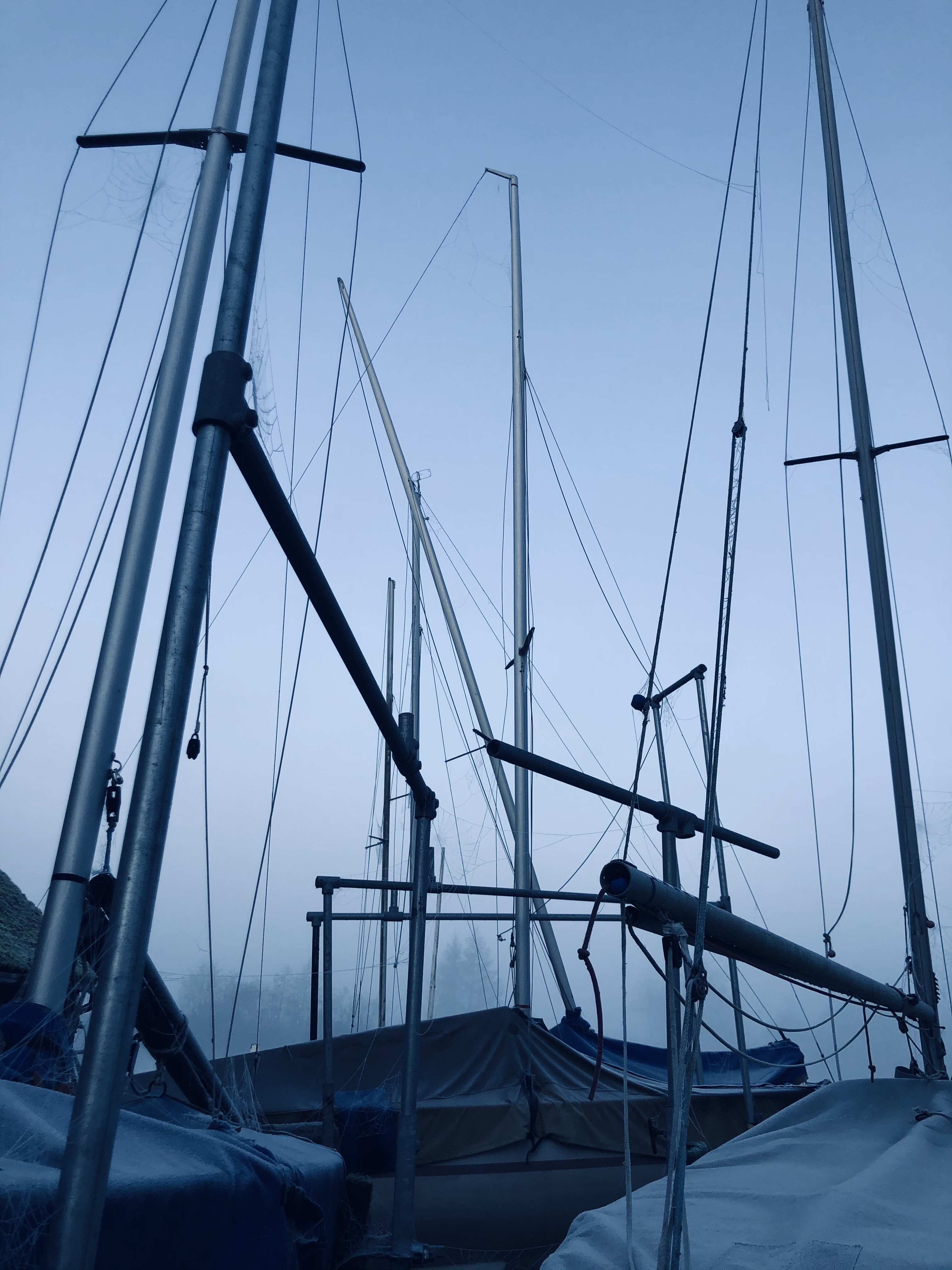
Kaz and I met before first light at the boat yard by the River Eliin with our rucksacks filled with bread, nuts, dried fruit and water. The only way to cross was by rowboat but we were not going to cross. We jumped over the low wooden fence and wandered through the boats that were huddled close together and covered with thick grey tarpaulins. The masts rose in criss-crossed mazes of white painted poles and ropes that were barely visible against the blue frozen fog of the dawn. We had agreed to sail downstream to the estuary, out to sea and along the coast to the foothills the Anatase Mountain range. Somewhere in the foothills, Great Gram Agate lived near the caves, disconnected from all who knew her as well as those who did not; some say she had become unhitched, living a truly wild existence unyoked from reality. But Gram Agate knew things. She knew things that no one else living or dead knew. She might be disjointed, but her knowledge about this land, the beyond and the between was better than anyone around. Everyone said that I would be just like her. Not just because I looked like her, tall with sharp green eyes, but because I had the same sense of the land and the water.

“Celeste, we shouldn’t be here.” Kaz, a fellow third born, whispered. His black parker coat was a hand me down and far too large; his head was barely visible through the thick fur of the hood. His voice seemed to emanate in a magical and ethereal way as his words floated through the fur on frozen breaths.

“Come on.” I said pushing my hood back a little to get a better look at the boats. “The Legend is here somewhere.”

“Of course it’s here. Where else would it be? We’re going to get out there, follow the Eliin to the sea and then – that’s it. It’s going to become a ghost ship because we’ll be frozen, drown or overrun by pirates.”

Kaz always had a tendency to lean towards the dramatic, always thinking of the worst-case scenario with an obvious catastrophic ending – if there was a spark from the fire he insisted it would turn into a blaze, if it rained he said it would flood and if the earth shook he insisted we would be buried under a mound of earth to slowly suffocate, unless we were knocked unconscious, then we would be dead instantly.

“Help me look.” I pulled his coat sleeve towards the next section of boats. “If we all stay here the food will run out before the thaw and we all die. If we all leave, the food will run out and we will all die. It’s what’s called a no-win situation.” I was sure there was a between and Gram Agate would know what flows betwixt staying and going.

“You hear about ghost ships all the time. What about The Bowhead? It went adrift, the crew froze to death and the captain was sat at his desk writing his account, logging all of the information, as you would expect a captain to do, and then he just froze pencil in hand, mid word and all. Or what about The Tiger Tooth? It came a ground empty of its entire crew, including the captain. The food, gold and all its cargo were still on board – so where were the crew? Pirates would have taken the gold and cargo. If the crew had evacuated, they would have taken their possessions surely. Maybe they killed each other? A wild mutiny! Or maybe they were all poisoned and dove overboard?”

“Stop. We’re not going to become a ghost ship and we are not going to kill each other, unless you don’t stop talking.”

I started to regret convincing Kaz to come along. He was the best navigator our age by a long shot and could easily navigate up and down the high seas of the coast. He just needed to talk a bit less so I could think.

An iron gate at the other side of the boat yard clanged shut and two hushed voices came closer and closer. Kaz and I huddled under the nearest boat and waited for them to pass. Kaz started to speak but I shook my head and he shrank back further under the boat. As they grew closer, I realized that it was Dad. Dad and someone else. Someone I did not know. I nearly stood up when Kaz pulled me back under the boat. I thought I knew just about everyone in the settlement. But Dad was being just as secretive as we were.

Dad and the man moved towards the boat house and then disappeared around the other side. We slipped around the boat and there in front of us was The Legend. Kaz took one side and I took the other, we quietly unhooked the tarpaulin, folded it and placed it in the stern of the boat. I unlocked the break on the boat trailer and together we pushed The Legend to the ramp. Kaz took the rope and tied it to the dock while I backed wheels the water. I unhitched the boat and pushed it into the water and watched it float off the trailer. Kaz pulled the rope and the boat moved in towards the dock. I looked back towards the boat house. Dad and the man were still on the other side. I pulled the trailer out of the water and positioned it near the other empty trailers so that it would be less obvious that the boat was missing.

“Quickly!” Kaz whispered.

I locked the trailer in place, returned to the river and boarded the boat with Kaz. Dad appeared and walked towards the river with his hands behind his back – he always did that when he was thinking deeply. The man was slightly behind and flipped through a folder of papers. I locked eyes with Dad just as we drifted into the current; startled, he turned the stranger away from the river before he could see us. Dad spoke emphatically and put his hand on the stranger’s arm as if to stop him from moving. Dad did not shout at us or call out as I would have expected. He did not even seem angry. What was Dad doing? I was an underage captain. I took the boat without permission. I was not even a first born. Why didn’t he stop us?


All pictures and writing are my own unless otherwise credited. Permission must be obtained before any image reproduction and credit must be issued in any image reproduction or quotations. 


Bedside Table Reads, Blog

Shortlist Read: Shuggie Bain

Hello! I’ve had a little rest from posting in January, but I am back and ready to go. I am continuing my goal of reading all the longlist Booker Prize nominated books from 2020 and to kick off 2021 I’ve started with the winning book, ‘Shuggie Bain’ by Douglas Stuart. It is story of toxic relationships, abuse, addiction, neglect and poverty set in 1980s Glasgow. While the narrative is about Shuggie, his love for his mother and growing up gay, it is as much, if not more, about his mother Agnes and her spiralling alcoholism. The effect on her children: Catherine, Alexander (Leek), and Shuggie is a truly raw exploration of the pain and paralysis of alcoholism and poverty. If you think you’ve read about these themes before, think again – Stuart’s rollercoaster of a novel will leave you gasping for breath, closing your eyes and wondering when the rollercoaster will come off the rails.

Shuggie, fifteen, is introduced in the first part, ‘1992 – The South Side’, where he lives alone in a boarding house. The opening line sets the scene of bleak oppression, ‘The day was flat.’ This simple sentence is followed by a semantic field of negativity – ‘abandoned’, ‘listlessly’ and ‘vacant-eyed’. Shuggie’s out of body experience with his ‘soul floating’ initially leads to the possibility of hope with a new day at the end of the paragraph where he ‘thought only of tomorrow’. With a dream of going to hairdressing college, Shuggie runs the deli counter to support his ‘digs’ and counts himself lucky to have the room. Within the boarding house where ‘he could smell the musty overcoat of the yellow-toothed man who ate only what smelled like buttered popcorn or creamed fish’ Shuggie searches for his identity staring in the mirror as ‘he tried to find something masculine to admire in himself.’ It is hard to see how the desperate ingrained despair of the past can lead to a new life for Shuggie.

The narrative shifts to the past, 1981 – Sighthill, where Agnes Bain, proud and beautiful, is described as ‘To be thirty-nine and have her husband and her three children, two of them nearly grown, all crammed together in her mammy’s (Lizzie) flat, gave her a feeling of failure.’ This failure extends to the men who are described as ‘rotting into the settee for want of decent work’. The deprivation is furthered in that ‘it would take an eternity to pay off a pair of children’s school trousers or a set of bathroom towels’. Agnes’ second husband, Big Shug, a Protestant taxi driver, is loose with money and ‘a selfish animal’; he dissolves any hope Agnes may have, fuels inevitable gritty conflicts and Agnes’ alcoholism that are shocking and sad to read.

The narrative progresses in time from 1981 to 1982 – Pithead and 1989 – The East End, coming full circle at the end in 1992 – The South Side. There are many scenes that haunt the reader long after completing the novel, such as the abuse Agnes endures from Big Shug in her alcoholic state ‘the hardened hairspray cracked like chicken bones as he wound his fingers into the strands. With a tug hard enough to rip handfuls out by the roots, he started up the stairs, dragging her behind him.’ While the novel is at times overwhelmed with similes, such as the ‘chicken bones’ above and the description of Anges ‘abandoned behind the door like a ragged draught excluder’, it is these comparisons that linger. These volatile vignettes result in Agnes’ attempt to escape, no more than when she ‘held out a glowing cigarette to the curtains’ while holding Shuggie close to her in an attempted suicide. The juxtaposition in the description of this scene with the ‘grey smoke’, the ‘orange flame’ and the ‘greedy fire’ with her ‘complete calm’ is chilling. The fire is beautiful with ‘dancing shadows on the walls and the paisley wallpaper came alive’ while Agnes and Shuggie waited for death in the ‘new beautiful silence’. It is abundantly clear that Shuggie loves and trusts his mother completely and is fearless in the face of the fire. It is this love that is so heart breaking as Anges’ deepening alcoholism grinds away any potential hope.

Equally, seventeen year-old Catherine is attacked when trying to find Leek at the pallet factory by ‘many hands [that] moved on to her body, roaming and searching’ threatening her with a ‘silver fishing knife’ that would leave her with a ‘Glasgow smile, a scar from ear to ear’ or even raped. The description intensifies as the ‘gutting knife rattled against her teeth’. The scene is desperate, made worse by her realisation that ‘the men standing around her were only boys, younger than her and probably younger than Leek’. The ingrained abuse of women from such a young age further emphasises the hopelessness of the narrative and it is unsurprising when, early on, Catherine marries young and moves to South Africa without looking back. Leaving her brothers to cope with Agnes is an act survival for Catherine; it creates a sense of hope that the cycle of paralysis can be broken.

However, leaving Leek and Shuggie with Agnes is bleak. Agnes oscillates between alcoholic oblivion and times of vague coherency in the all too vivid description when ‘She lowered her head into the cavernous bag and tilted it slightly to her face. The children watched the muscles in her throat pulse as she took several long slugs from the can of warm lager she had hidden there.’ Is there any hope for Shuggie? He regularly misses school to care for his mother, heartbreakingly described: ‘With a practiced finger he reached inside her mouth and hooked out the bronchial fluid and bile. He wiped her mouth clean and lowered her head safely back on to her left shoulder.’  Equally is his struggle with his identity in a masculine world and wonders: ‘Was this the moment that would make him normal?’ While most of the novel follows Agnes’ story, it is Shuggie’s absence in the narrative that is so telling of his neglect.

With the dialogue written mostly in dialect, the inclusion of slang and simple hard-hitting prose, the novel paints a detailed picture of Shuggie’s life growing up in Glasglow. I would highly recommend ‘Shuggie Bain’, but be prepared for the no holds barred exploration of Agnes, Shuggie, Catherine and Leek, their relationships, poverty, abuse and alcoholism, and persist to the end to see if they are able to realise their hopes and break free from the paralysis that consumes their lives.

Themes: family, dysfunctional family, abuse, addiction, coming of age, poverty, neglect, religion, violence, masculinity, bullying, unemployment, prostitution, gambling, loneliness, hopelessness, redemption, hope, mother-son relationship, sexuality, identity, class, status, aspiration


All pictures and writing are my own unless otherwise credited. Permission must be obtained before any image reproduction and credit must be issued in any image reproduction or quotations. 


Blog, Creative Shorts, New Writing

The Footbridge

Mist rose from the white froth of the river as it rushed under the footbridge. To the right of the bridge was the weir – large iron gates shoulder to shoulder as the river poured over.  To the left of the footbridge, black angry whirlpools that were whisked downstream by the current. The spray from the water that crashed into the weir landed on the wooden footbridge in droplets and froze almost as quickly as it kissed the wood forming an icy sheath along the handrails and planks.

This was no place to be so early on a bitter December morning.

The footbridge was long. One of the longest in the kingdom. Crossing the river, even over the footbridge at this time of year was, needless to say, perilous. One slip, one rotten piece of wood and between the freezing river and the current, it would take a miracle to survive.

I tied the black woollen scarf more tightly around my neck and cursed myself for rushing, leaving my hat and gloves behind when I grabbed the oversized duffle coat. Numbness crept around my ears and I began to regret my half-hearted attempt at deception and wished I had not cropped my hair into such a short bob before setting out, but everyone knew my long, curly black hair. It was wild and even under a hat the curls would force their way loose. I would be seen. But what’s done, is done and my curls lay tied in an amputated ponytail under the floorboard in my bedroom. I needed to cross the bridge before the sun rose. I rubbed my bare hands together and prepared to traverse the icy planks to the field on the other side of the river where he would be waiting.

‘You have nine lives.’ I said out loud. ‘Remember Forest, you have nine lives.’

And as if walking a tightrope, I lifted my arms out from my sides and placed my foot on the first board, and the next and the next. Between the gaps in the planks, the river rushed dizzyingly underneath. The footbridge swayed with the white water to the right, the whirlpools to the left and the driving current below. I lost my balance and I wasn’t even halfway across. The icy air constricted my lungs arresting my breath and my vision clouded.

I reached out to the handrail and flinched as the icy surface burned my palm and retracted my hand. I closed my eyes and pushed my hands into my pockets to warm them. I felt the leather pouch of money. It weighed heavily in my coat and I remembered my purpose on this early December morning. I clutched the purse, opened my eyes and stared into the distance, along the footbridge to the other side. I ignored the weir, the whirlpools and the current beneath the footbridge and stepped solidly from one frozen board to the next. I breathed in through my nose and out through my mouth. Slowly. Deliberately. Evenly.

It was said that within my eyes, the whole of the kingdom could be seen. Even in one so young as myself. But what they did not know was that through my eyes, I could see the whole of the kingdom. Some secrets had to be kept.

I reached the bend in the footbridge and refocused my eyes towards the end – the lock. Hennery, the lock keeper, would not be up yet. He walked the streets of the town in the dead of night, ghostlike. Some say he was simply so old that he no longer slept at night. Others say he was cursed with an earthly purgatory of sleeplessness. I know he seeks what he has lost and can only hope to find under the cover of darkness.

As I neared the lock, I dared to look to my right, I had passed the weir and the white water had calmed to strong black current; I was able to keep my balance while glancing to either side of the footbridge. It was still early enough that not a soul stirred, not even a mallard. I continued to tread lightly, my shoes barely touching the footbridge. The last section I ran across on tiptoes until I reached the frozen earth of the bank. As expected, Hennery was nowhere to be seen.

I blew into my hands and rubbed them together as I peered both ways along the footpath. The sun was high enough to form long golden beams that accentuated the ethereal mist that rose from the river and rolled over the bank and settled in frozen fractal patterns on the saltmarsh-grasses, reeds and bulrushes. Before long, lovers would be out for early morning walks and Hennery would be summoned by boats needing passage through the lock.

How long was I to wait?

I moved off of the footpath into the cover of the horse chestnut trees of the bankside. I removed the purse and weighed it in my right hand. I scanned the bank, the river and the footbridge behind me. The scene was as empty as the soulless eyes of a dead man. My kingdom slept.

The grasses rustled and a frozen branch cracked. He was here. I laid the purse between two roots of the tree and stepped towards the footpath. Aiding and abetting a known fugitive. That is the crime I would be convicted of – penalty of death in my kingdom under the stars. My breathing became uneven again, the river scene swirled. The words aiding and abetting rebounded from one side of my mind to the other.

I caught sight of the horse chestnut tree. The pouch was gone. I had aided and abetted my father, a fugitive, for the last time. I ran back across the footbridge ignoring the ice, the weir and whirlpools. I ran along the empty Riverside Street. I ran up the hill to our house and stopped short of the path that led to the front door. The light was on in Mother’s room. The house was waking up. I untied my scarf and pulled it over my head, retied it under my chin and pulled the collar of the coat up to cover my neck.

I had lost one of my nine lives on the footbridge. I felt it drown in the river. But I would always land on my feet, Father had said, so I had to keep going. I turned away from the only home I had known and headed on the road out of town.


All pictures and writing are my own unless otherwise credited. Permission must be obtained before any image reproduction and credit must be issued in any image reproduction or quotations. 


Bedside Table Reads, Blog

Shortlist Read: The Black Flamingo

This week, I have read The Black Flamingo, by Dean Atta, from the YA Book Prize Shortlist 2020. I was so excited to read this novel of verse, and I was not disappointed. A highly relatable and moving coming of age story about Michael, as he explores his identity as a half Jamaican and half Greek-Cypriot gay teen and ultimately, his drag debut.

Written in the first person, the pages are filled with verse and illustrations (by Anshika Khullar) that propels the reader through Michael’s life in London from six years old to university. Interspersed, Atta includes text messages and notes, all presented with an economy of words that juxtaposes the deeper introspection providing an intimidate glimpse into Michael’s heart, mind and soul.

The novel opens with a Prologue, and as expected, it reveals the narrative journey: ‘The black flamingo is me trying to find myself’ to ultimately ‘I am the fairy finding my own magic’. These short phrases sum up the introspective nature of the verse that culminates with Michael’s revelation at a drag artist, ‘I stand triumphant in a leotard and heels, a full face of make-up and a beard’ which is both exhilarating and hopeful.

However, within the first few pages, Michael reflects that ‘I often feel like a bad egg that was not meant to be’. This is a dark and despairing phrase; you have to hope that ‘the magic’ referred to in the Prologue provides Michael with enough agency not only to overcome this negativity and embrace all of himself. This darkness is represented in the episode where his father shouted at his mother, ‘You’re useless!’ while ‘throwing his plate down, turkey stuck to the kitchen floor’. The verbal abuse combined with the violent action is just one example of Michael’s hurdles.

The narrative fast forwards to Michael’s ‘sixth birthday’ where all he wanted was a ‘Barbie’ but instead was given ‘Teenage Mutant Ninja Turtles’. However, later that year, his Mother gave him a Barbie described as: ‘No wrapping paper, just / a pink bow on the box. / Mummy has bought me / a Barbie! / But she got it wrong. / It’s not the Goddess / but I hug her anyway.’ Atta highlights ‘a Barbie!’, the short phrase separated by line breaks signifying the importance of the gift as well as the developing relationship between Michael and his mother.

In Michael’s continued search for identity, on his seventh birthday, he no longer wants a Barbie, but rather he describes: ‘I tell Mummy I want to change my last name. I tell her I want to match her. I want to change my surname from his Brown to her Angeli.’ The repetition of ‘I tell’ demonstrates the forcefulness of his desire to not to have ‘his name /dragging behind me like a dead dog on a lead’. The repetition is furthered by the simile as well as the alliteration of the words ‘dragging’, ‘dead’ and ‘dog’. Atta emphatically concludes his relationship with his father by relinquishing his association with his name with further similes: ‘like a toilet roll on the sole of my new Kickers boots, / like a shedded snakeskin / like a second shadow’. These comparisons are economically phrased hard hitting as Michael soars with his new name ‘Michael Angeli’ where he ‘can really fly’.

There are many evocative, sad and joyous examples of narrative verse throughout The Black Flamingo. One that particularly hit home was ‘Don’t let anyone tell you / that you are half anything’ and ‘you are a full human / being.’ Exploring, as many of us do, our composite identities, and for Michael what it means ‘to be British, Cypriot and Jamaican’ is highly relatable and affirms that there are many parts that can make up the whole.

The narrative verse takes us through Michael’s teenage years, two schools and his relationships his friends: Emily, Callum, Daisy, Rowan, Grace, Destiny and Faith as well as his Uncle B and sister Anna. It is Michael’s ‘coming out’ letter to Rowan that is so moving and exposes his vulnerableness when he writes ‘I’ve liked you for so long / I like your ginger hair, your freckles / will you go out with me?’ and the heartbreak we feel with him when Rowan responds: ‘Oh, right,’ he says. ‘This is awkward.’

While Michael navigates secondary school, it is in university where he seeks to solidify his identity ultimately trying out the Drag Society where his journey ends and begins simultaneously with his first performance as Black Flamingo ‘I call myself black. / I call myself queer. / I call myself beautiful. / I call myself eternal. / I call myself iconic. / I call myself futuristic.’ The simple sentences, making use of anaphora, ‘I call’ with all end-stopped lines emphasise Michael’s certainty of who he is as he subsequently says, ‘You can call me The Black Flamingo’. The verse is indeed a celebration of individuality. It is also a warning, not to be defined by labels.

Presented as notes, Atta includes: ‘How to Do Drag’, ‘What’s it like to be a Black Drag Artist (for those of you who aren’t)’ and ‘How to Come Out as Gay’. The lines from these ‘How to…’ notes that linger are: ‘Remember you have the right to be proud. / Remember you have the right to be you.’ Through the repetition of ‘remember’ and ‘right’ the lines form an uplifting message of hope.

The Black Flamingo explores many dichotomies throughout – gay and straight, female and male, Black and White but ultimately it is a testimony that nothing is better than being yourself. The Black Flamingo is easily one of the best novels of verse fiction and one that everyone should read.

Themes: identity, belonging, sexuality, race, gender, coming of age, relationships, family, acceptance, mother-son relationships, self-discovery, inner truth, hope


All pictures and writing are my own unless otherwise credited. Permission must be obtained before any image reproduction and credit must be issued in any image reproduction or quotations. 


Blog, Creative Shorts, New Writing

Below Freezing

The fog rolled in overnight. It had settled around the treetops before I went to bed, but it silently crept through the bare branches until it covered the roads, the fields and the river. I left the house before dawn and entered the oblivion of the day.

I pressed on towards the Thames, coughing as the freezing air caught in my lungs. The path seemed longer than I had remembered and although the density of the fog was unexpected, it was not unwanted, and I wrapped my knitted scarf more tightly around my neck and covered my mouth with it in an effort to stifle the sudden loud coughs that could give me away.

As I reached the riverbank, the sun rose just enough and began to burn off the fog; the river came into view with the bluish shadows of the trees on the bank opposite. Snapshots of the tree’s reflections shimmered in an iridescent steel grey in the river and undulated slightly with the movement of the current.

I waited in the silence and listened.

In the freezing fog, the silence was broken by the snap of the odd branch or a catch of heavy breathing. I was not alone.

My scarf had slipped down and as I stood still, waiting for the inevitable, I pushed the loose hair that had escaped from my heavy coat out of my face. The stray strands had crystalised and crunched in my fingers; I realised that my breath caught on the ends; it must have been below freezing. In one way or another, I could die by this bank and in the short time I waited, the sun rose further and illuminated the white fog and myself in my black coat. Steam rose off of the river and created a haze in which it would be easy to disappear.

Two geese emerged from the fog and waddled close to my feet. I coughed into my scarf startling them into flight over the river honking as they drove their wings into the mist. I sidled down the bank towards the mooring, slipping on the icy grass and geese droppings until I reached the short dock. I pulled the leather gloves from my hands and stuffed them into my pockets. The rowboat was exactly where I thought it would be and I reached down to untie the rope from the post, but I stopped just before I touched it. A spider’s web, large and complex, formed a triangle between the post and the rope, heavily frozen white lace. It was beautiful. Delicate and perfect, nature’s tatting. I peered closer into the boat and in the corners and between the seats, frosted spider’s webs decorated the crevices like wedding finery. Though the sun was rising, the fog still hung heavy and the footsteps echoed closer and closer. I pulled the rope and released it from the post shattering the spider’s web.

I tip-toed across the wooden planks of the dock and eased myself into the rowboat sliding into the middle and held on to the sides briefly for balance. I removed one of the oars and pushed it against the dock and drifted towards the middle of the river and under the low-lying fog just as I heard a voice say, ‘I can’t see her.’

I fixed the oar into place and as noiselessly as possible; I removed the other oar locked it in and let the oars dip into the water. I pulled gently, lining the boat up with the shadows of the trees that I could now see lined both banks. The skin of my hands stuck to the oars and I wished I had put my gloves back on but there was no time to stop now. The winter sun rose fast, and I could see the fog in the distance dissipating. Despite the promise of the warmth of the sun, my fingers were so cold that the first two on each hand ached with stabbing pains so sharp I wondered if I would be able to keep up the pace as I closed them more tightly around the oar and pulled. Ignoring the pain, I manoeuvred the boat into the current as I had been taught and the boat moved faster and faster as I rowed.

Two swans escorted me briefly, gliding next to the boat, balanced and pure like some divine symbol of protection sent aid and abet my escape, as I tried to vanish along the steaming foggy river. On the bank were two figures, one with a rifle raised towards the river and the boat. A shot rang out. One of the swans faltered, let out a painful yelp and lost its balance. It was a crime to kill a swan, but I did not think they cared about the law. I gripped the oars harder, my fingers now blue, and rowed harder leaving the other swan to swim around its dying mate.

From the bank, the voices argued and grew distant. The dying swan had bought me some time and as I passed under the old stone bridge, I disappeared.


All pictures and writing are my own unless otherwise credited. Permission must be obtained before any image reproduction and credit must be issued in any image reproduction or quotations. 


Bedside Table Reads, Blog

Shortlist Read: The New Wilderness

This week I have read The New Wilderness by Diane Cook from the Booker Prize Shortlist 2020, a dystopian fiction of environmental destruction and survival. Volunteering for an experiment in leaving ‘no trace’, the characters in the ‘Wilderness State’ exist as a collective ‘Community’ of nomadic hunter-gatherers. The narrative is centred on the mother-daughter relationship between Beatrice, who agrees to enter the experiment with the promise of better health for her daughter, Agnes, who is dying from poison ‘City’ air.

The New Wilderness presents the impending doom of environmental destruction, not as an anticipated event, but one that has already occurred. Written in five parts: ‘The Ballad of Beatrice; In the Beginning; The Big Walk; The Ballad of Agnes and Friend or Foe’, the third person narration is able to effectively shift perspectives from Beatrice to Agnes, exploring the depth and divisions of their relationship. The shift to Agnes’ narrative works particularly well as an exploration a younger generation’s collective responsibility of a respectful existence in the wake of the older generation’s individualistic greed and disregard for the natural world. Small revelations alongside Agnes’ maturation allow her an insight into Beatrice, although Agnes herself has forged an almost animalistic bond with the land and thereby establishing a greater divide between herself and her mother.

The social commentary on the ever-decreasing natural resources pervades the novel. The rich description of the natural world where the landscape is described as ‘grasslands that smelled of nutmeg after a rain’ is juxtaposed with images of the ‘City’ with poison air and the ‘streets were crowded, filthy, where rows of high-rises sprawled to the horizon and beyond.’ While these two environments seemingly co-exist, it raises the question of whether the filth and sprawl of the ‘City’ is unstoppable and if the ‘Wilderness State’, last vestige of the natural world, is doomed. David Attenborough addresses this very idea in the documentary ‘A Life on Our Planet’, and while our destruction is irrefutable, he does give a sense that we can still, collectively, enact change, whereas The New Wilderness leaves us wondering if only a few are actually destined to survive – a rather hopeless thought.  

The twenty original members of the ‘Wilderness State Community’ were not scientists, naturalists or environmentalists; they were twenty volunteers who gave up everything because this experiment was their last option. They quickly lose most of the technological trappings of modern society, keeping time by the seasons and flowers with the effect that their existence seems to be in sync with the ‘wild world’. This is echoed in the ‘Manual’ which dictates the rules including the ‘bags of their garbage they carried with them to be weighed and disposed of by the Rangers at Post’. The drive towards ‘no trace’ is seemingly impossible as the group complete ‘micro trash sweeps’ to completely encourage ‘re-wilding’. Additionally, the role of the Rangers is not clearly defined as they seem to function solely to deliver post and provide the group with the next set of instructions. The fact that the ‘Community’ makes use of rope, bedding, cookware and steals processed food from the Post seems to contradict the notion that the ‘Community’ should be living off of the land as primitive hunter-gathers and makes one question the nature of the experiment.

The group continually evaluate what is necessary, carrying the ‘forty-pound cast-iron pot’ through the Wilderness and the ‘Book Bag’ which once contained ‘the Book of Fables’ but ‘had been lost to a flash flood’. Both seem almost farcical as the group ‘were limited to seven days in one place’ and carrying the cast-iron pot across the ‘Wilderness State’ is nothing short of madness. With Agnes growing up with little memory of the ‘City’, her skills of survival are finely tuned over the years and her instincts lead her to ‘follow the animals’ to find water and declares herself ‘I’m a leader’ when having to negotiate with the Rangers. While some of the older members of the ‘Community’ struggle to adapt to the de-evolved existence, those young enough or born in the Wilderness State are almost wild animals themselves.

The shift in relationships between the remaining original twenty of the ‘Community’ is not unexpected and Beatrice, a natural leader, vies with Carl, ‘the true hunter of the Community’, with Glen and Agnes sidelined. As with any dystopian survival story, it is survival of the fittest, and Glen lingers as a weak link throughout although he ‘was the one who knew about the study’ and was key in securing their place in the experiment. The result is that Beatrice’s relationships are volatile, and you wonder how long Beatrice, Glen and Carl can survive the three-way relationship in the pressure cooker of survival.

When Agnes reaches thirteen years old, The New Wilderness sets her up for the expected teenage conflicts with Beatrice, on their journey to nowhere in the nature reserve. Circling the ‘Wilderness State’, from ‘Post to Post’, with self-taught survival skills, it is unbelievable when Beatrice, on discovery that her own mother had died in the City, is overcome with guilt and remorse in leaving her, dramatically departs to see to ‘Nana’s affairs’ without even a good-bye. Prompted by ‘a loud bellowing horn’ Beatrice ‘smoothed down her hair ‘and announced, ‘I have to go’ and moved ‘mechanically’ towards the tanker truck. Beatrice is described as ‘in this moment she would do anything to leave this place’. Beatrice’s whole reasoning for bringing Agnes into the ‘Wilderness State’ was to save her, a supreme act of motherly love, it is therefore, confounding when she abruptly leaves Agnes and Glen. This lays the foundations for further conflicts between Agnes and Beatrice, propelling Agnes into her first real relationship with Jake, a newcomer to the Wilderness, who unfortunately seems to remain in the background.

While The New Wilderness is less clear on how the ‘Community’ made the shift from average urban unskilled city dwellers to skilled nomadic hunter-gathers with only a ‘Manual’ for guidance, the relationship between Beatrice and Agnes successfully drives the narrative. As a dystopian novel, it harnesses the expected tropes of the perfect place in the elusive ‘Private Lands’, societal control of the microcosm of the ‘Wilderness State’ with a battle between individualism and the collective as well as the ever-present threat to survival of both the ‘Community’ and the natural world. Dystopian fiction is one of my favourite genres, however, the characters here seem anaesthetised to some of the more truly tragic events of the narrative. This may indeed reflect the survival of the fittest mentality needed to exist in the ‘Wilderness State’ but I would have liked the members of the ‘Community’ to have conveyed a greater sense of compassion for each other, especially given the length of time they were together, and in turn cultivated greater sympathy on the part of the reader. The journey through The New Wilderness begs us to reflect on our own imprint on our natural world and take action before it is too late.

Themes: mother-daughter relationships, environment, climate change, pollution, nature preservation, survival, choice, miscarriage, parenting, individualism, collectivism.


All pictures and writing are my own unless otherwise credited. Permission must be obtained before any image reproduction and credit must be issued in any image reproduction or quotations. 


Blog, Creative Shorts, New Writing

The Clock Tower

The clock on the tower had stopped. I was not sure how long the hands had ceased to move as I had been sitting at the table outside the café stirring my coffee into swirls. I stirred clockwise then anticlockwise as if to undo what had been done. The clock could have been still for seconds or minutes or longer.

People hurried past the tables outside the café; sometimes a bag or umbrella or the person themselves knocked into my back as they tried to escape the mizzling rain that had started to fall by edging as close as possible to the path under the awnings. No one said: ‘excuse me’ or ‘pardon’ or ‘I’m sorry’. I steadied the cup in its saucer after each encounter and took quick sips of the hot sweet liquid which burnt my tongue. I held the cup to the saucer with my thumbs and index fingers in anticipation of the next interruption.

I would not usually sit outside the café by myself. Not this café anyway. And not on a school day. From my table, I could see the whole of the clock tower. An austere landmark in the town with rich bronze mechanisms that slowly moved behind the glass doors, and harnessed the steam from below ground to generate the momentum and press time forward. The clock tower released steam from the top turret every quarter of an hour and today the steam had merged with the misty fog from the sea front, but the puffs of steam no longer seemed to mark the passing hours.

I thought of all the time wasted. Notions of what should have been, what I could have done, what still might be. And then in turn, how time was eating away at me, withering me, slowly taking the breath from my body. I thought of all the steam that must had been building up under the clock tower like it was holding its breath waiting for the inevitable volcanic geothermic explosion.

People would gossip. When they found out. Time would be taken up with supposition – the whys and wherefores. My hand jerked against the handle of the cup and I spilt some of the coffee into the saucer. This time it was not a passer-by, but my own nervous spasm that I tried so hard to control when it happened. I poured the coffee from the saucer back into the cup. It was a murky brown, and the rich taste was altered by its distillation and was no longer appealing or comforting. I pushed the saucer away and pressed my hands together under the table as if in prayer or rather to hide the evidence between my knees. The coldness of my fingers penetrated my school skirt and tights and I shivered in my duffel coat.

I knew the day was progressing. Even the dull light of the hidden sun had changed in the rain. But the clock had stopped. The chasm of time where I had left him behind at the pier and now, where I waited to be discovered, grew wider and wider. We should have taken the bus. But there was no one at the pier, so we walked.

Was it an accident?

Time obscures memory. Even a memory from earlier today. Did we argue? It was tit for tat, wasn’t it? A push for a push. He was so tall and broad. How was I to know he would trip? The bigger they are the harder they fall, that’s the saying, isn’t it? Who’s to know if I meant it. I meant it, didn’t I? I didn’t mean for it to crack though. For him to crack. For his clock to stop.

Someone knocked into my back again as the weather turned from a drizzle to a slashing rain. The wind picked up and I jarred the table enough for the coffee cup to teeter back and forth and eventually fall over before I could catch the cup. The brown sludge bled over the red plastic gingham table covering and slowly dripped off the far edge. The coffee that reached the ground mixed with the rain on the red paving stones and ran off in the grouting towards the gutter.

I closed my eyes. It was an accident, I thought over and over, as I stood up and placed the cup upright on the saucer. I pulled several paper serviettes out of the dispenser, blotted the table and soaked up the coffee. I stuffed the distained serviettes into the cup. Steam erupted from the top of the clock tower. The hands began to move again. The time between then and now faded and was almost non-existent.

I pushed my hands into my pockets. No one saw me at the pier. If anyone asked and they wouldn’t, would they? But if anyone asked, I wasn’t there – it must have been an accident, surely? As I walked away from the clock tower, I kept close under the awning to avoid the brunt of the heavy rain and caught the elbow of a woman seated at the next table and jarred her hand as she brought her coffee cup up to her lips. The coffee lurched out in large drops and splattered on the red gingham. I almost said, ‘sorry’, but I had nothing to be sorry for really, did I?


All pictures and writing are my own unless otherwise credited. Permission must be obtained before any image reproduction and credit must be issued in any image reproduction or quotations.