
Blog, Creative Shorts, New Writing

Waste Land

IMG_0643 b

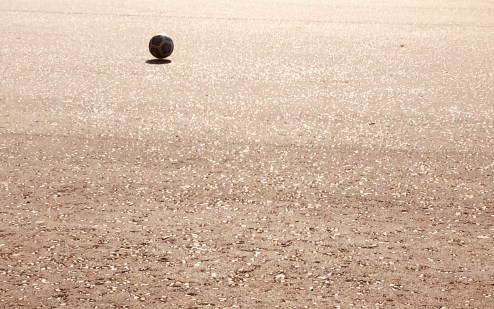
In the hazy summer, the light dazzling jewels, a thousand angels dance in the afternoon. The concrete, a galaxy paved on the ground, extends as far as the eye can see. Glossy stones glimmer in the sun, a sea of refracted light, searing bare feet. Heat waves rise up creating puddles stretched out like silk ribbons just beyond reach, mirages wavering and disappearing when you blink, a game of lost reality.

Almost monochrome, rainbow colours are bleached white and silver. Unrelenting, each wave of heat makes you wish you could turn it off as simply as a flipping a light switch, allowing night to fall, a security curtain, to close the day’s play. The city transforms, time slows to a veiled performance, a slow red bull.

A ball is kicked.

It bounces, crossing the concrete, a lone explorer in a sea of stone. It was time.

I turn away from the ball and head towards the gap between Cannon and Walbrook Street. It was time to leave the mad dogs to the mid-day sun and meet Fletch. When we get back to school in September and you get that inevitable question, what did you do during your summer? Fletch and I would have answers. No exotic holidays abroad, or second homes or climbing mountains. But real, hard evidence of the subterranean secret under our feet.

My face feels red and my freckles would have multiplied in the short time in the sun. I pull my hair up and tied it in a large top knot that wobbles as I walk. My feet sweat in the knee length wellies and the rubber knocks the bare skin of my legs. I look out of place wearing shorts and a t-shirt, a large rucksack on my back and a hoodie in hand.

Fletch is already at the entrance. He is taller than the wooden door and seems to have grown since yesterday, his arms and legs longer, his body wiry. I push my top knot a bit higher to give me extra height.

The secret rivers of London are actually no secret. They, the officials, have tried to excavate some of them, and others have been turned into sewers. Treasures have been found: coins, tools, shoes and even jewellery. But we aren’t after lost treasures of the Roman Empire or bones of long forgotten smugglers.

The air is cooler in the alleyway and we open the entrance and the damp air rises up is actually cold and clashes with the summer heat. I pull my sweatshirt over my head and place my head torch over my top knot like a crown and switch it on. We leave the streets of London behind and descend the ladder until we reach the bottom. The water pools around our ankles.

We are travellers looking for an ancient bronze door in the tunnels, perhaps a splintered landmark. The bronze door of London. A lesson taught for fun in history of the strange and mysterious of London. We go deeper than the tube lines. Deeper than the secret rivers. Deeper than the catacombs. Some say it leads to hell. Others, paradise.

I reach out and run my hand along the mossy wall as we descend; the tunnel is desolate. I thought of how empty spaces can frighten and when you are engulfed in emptiness, you can become hollow. A blank, devoid of meaning and purpose. You become nothing encompassed in nothing.

I shake my head and the head torch flicks from side to side illuminating the tunnel in bursts. These are dangerous thoughts and the waste land tunnel is playing tricks on me already.


All pictures and writing are my own unless otherwise credited. Permission must be obtained before any image reproduction and credit must be issued in any image reproduction or quotations. 


Bedside Table Reads, Blog

Shortlist Read: A Good Girl’s Guide to Murder

IMG_7088

Hello!

This week I have read A Good Girl’s Guide to Murder by Holly Jackson from the YA Book Prize 2020 Shortlist. It is a page turning, crime thriller where, Pippa Fitz-Amboi, tries to uncover a cold case murder in her small town of Little Kilton.

For her EPQ (Extended Project Qualification), as part of her A-Levels, Pippa’s research is based on the ‘2012 missing persons investigation of Andie Bell’ as well as the ‘implications of the press in their presentations of Sal Singh and his alleged guilt’, both of whom attended her school. The EPQ forms the basis of her investigation.

The narrative is presented through the Pip’s first-person production reports for her EPQ, ‘my production log will have to be a little different: I’m going to record all the research I do here, both relevant and irrelevant’. Transcripts of Pip’s interviews are also included and written in interview format:

‘Pip: Do you mind if I record this interview so I can type it up later to use in my project?

Angela: Yes, that’s fine. I ‘m sorry I’ve only got about ten minutes to give you. So what do you want to know about missing persons?

Pip: Well, I was wondering if you could talk me through what happens when someone is reported missing?’

In addition, the story is interspersed with third person narration such as how Pip behaves when she gets nervous: ‘Oh god, this is what happened when she was nervous or backed into a corner; she started spewing useless facts dressed up as bad jokes. And the other thing: nervous Pip turned four strokes more posh’. The transitions between points of view are seamless and provides the reader access to Pip’s thought process as well as omniscient knowledge of the other characters and events.

The fictional town of Little Kilton, based on Great Missenden, and the murder mystery is exemplified through a map, detailing: Sal’s house, Andie Bell’s house, the location of Andie’s car, the school and the woods. All locations that feel as though they could be real, creating a layer of authenticity to the narrative and an unnerving sense of the factual buried within the fiction.

The atmosphere of mystery is established from the outset with the Singh house described as ‘their home was like the town’s own haunted house’ with children ‘daring one another to run up and touch the front gate’. This image is reminiscent of the mystery surrounding the Radley house in Harper Lee’s To Kill a Mocking Bird where ‘Jem wouldn’t get any farther than the Radley gate’.

Pip has a Type A personality. She is smart, ambitious and highly organised. In the midst of her EPQ investigation, she tries to complete her application to Cambridge, prepare for a ‘pre-interview ELAT exam’, finish the ‘admission essay’ and take the entrance exam. However, the deeper Pip digs, her investigation has to potential to derail her future. Pip’s strength and intelligence as an investigator has hints of Riverdale’s Betty and Veronica Mars, unafraid and fact based, strong female protagonist role models.

Pip’s family is a reflection of contemporary families. Her ‘real’ father ‘died in a car accident’ when she was a toddler and she describes Victor (her step-father) and her brother Joshua, not as ‘just three-eighths hers, not just forty percent family, they were fully hers’. As a family unit they come in and out of the narrative, providing a support network and positive encouragement. Their closeness is demonstrated as Victor addresses Pip endearingly as ‘Pickle’. Victor adds moments of light relief in the narrative and is described ‘buoyant’. His actions are humorous as he ‘dramatically, gripping the banister reaching for the departing teenagers, like the house was a sinking ship and he the heroic captain going down with it’ while saying, ‘Fare thee well’.

As Pip works with Ravi, Sal’s older brother, they develop an ever-growing list of ‘Persons of Interest’ uncovering unlikely associations, lies and motives. With the detective skills of Agatha Christie’s Poirot and Miss Marple, in conjunction with the technology of contemporary society, Pip uses everything at her disposal: computers, mobile phones, photographs and police reports, in an attempt to unravel the mystery of missing Andie Bell, the supposed guilt of Sal Singh and uncover the secrets of a small town that hides a murderer.

Themes: murder, lies, secrets, deceit, truth, drugs, date rape, deceit, power, money, bullying, friendship, loyalty, belief, honesty, family


All pictures and writing are my own unless otherwise credited. Permission must be obtained before any image reproduction and credit must be issued in any image reproduction or quotations. 


Blog, Creative Shorts, New Writing

The Railway


IMG_0040

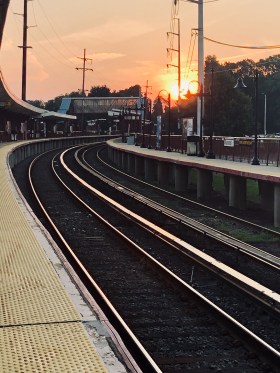
From the railway carriage I caught glimpses – a road here and a house there.  Fields. Hedgerows. Stonewalls. Colours blurred. Greys, greens and browns stretched like motorway trail lights. I rested my forehead against the glass; it burned cold. My reflection laced with the hills as the train charged along the track like a soldier in the heat of engagement. As the sun descended, little pieces of my reflection merged with the meadows and drifted away in the wake of the train. Swift like spirits, the carriages cut through the countryside and eventually came to a shrill halt at the village platform of Benson.

Commuters rushed off the train and buzzed away on scooters and bikes or walked briskly flat faced, oblivious to their surroundings and most importantly, unaware that I had loitered.

I walked along the platform towards the setting sun. Glowing white in the centre, surrounded by pale yellows and oranges, it slipped towards the tracks, its golden glory siphoning away any remaining warmth.

The ticket collector emerged from the station shop. I turned and watched as he crammed a large baguette into his mouth. He smiled with his mouth full before disappearing behind the security coded door.

Did he know?

‘You dawdle. Why do you always dawdle?’ Not Mama or Mother. Always Bria. Bria never shouted. Not really. Everything was always said on a soft breath with a harsh undertone leaving an edge that grew, taking control of my mind and heart, creating fissures where none had ever existed before.

The next train would not be long. Twenty, thirty minutes at most. My window of opportunity was closing, and I wished the sun would set faster before Bria knew I was late coming home from school. The electronic sign above the platform flashed yellow letters ‘Next Train: 22 min’.

The damp evening air made the skin of my face feel clammy. I knew it would happen if I stood still. Still like I had been petrified in stone millions of years old. Grandma never lied although Bria always said that she was, in no uncertain terms, off her rocker. But I trusted Grandma more than Bria and was sure they would show. One day. Today? Tomorrow? I know.

For when the sun meets the horizon, and the air numbs your nose, with the rising of the moon, out of their sleep they will stir soon, in a shower of Earthly dust, look to the skies you must, for the Faeries will be on the rise, with shimmering wings they soar like little spies, over houses and over walls, ready to answer your calls.

It’s easy to miss. People look but don’t see.

There, in the distance, along the tracks, glinting and glistening and flickering, closer and closer. Rising from between the railway sleepers, just a minute more for the shimmering to take form.

And the station master’s door slammed shut. I flinched. I blinked. And in that moment the sun had set, and night settled on the railway station.


All pictures and writing are my own unless otherwise credited. Permission must be obtained before any image reproduction and credit must be issued in any image reproduction or quotations. 


Bedside Table Reads, Blog

Longlist Read: Who They Was


IMG_7053b

Hello!

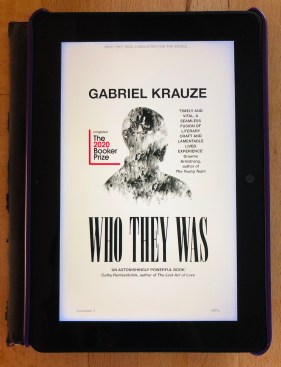
This week I have chosen to read Who They Was by Gabriel Krauze from the 2020 Booker Prize Longlist. A work of autofiction about growing up in South Kilburn, London, Krauze explores his young life of violence, drugs, murder, revenge and reputation but also of family, respect and education. The London Krauze inhabits juxtaposes images of London as a business as well as a tourist capital of the world and conveys a relentless, seething war that lies beneath.

Written in the first person, present tense, Krauze begins in medias res, ‘And jump out the whip and I’m hitting the pavement’ propelling the reader into his world and shockingly, into the mugging he is about to commit describing ‘And I’m creeping up fast to get behind her’. This is contrasted with the narration of when he is closer to the woman ‘I can smell shampoo and softness and then expensive perfume.’ This olfactory sensory impression lingers with the sibilance and walks a fine line between beauty and predatory. The violence of the scene when he ‘clocks she’s got a big diamond ring on her wedding finger’ is simply stated, ‘So I snap her finger back…it’s like folding paper’.

Written in a stream of consciousness, Krauze’s sentences vary from run on passages of action and imagery ‘and I’m running after the whip, inhaling the morning, glass needles of sunlight piercing through the sky and falling all around me…’ to sharp and simple, ‘I go to Uncle T’s.’ The brutal meets the beautiful as the language oscillates between slang, ‘I bell my boy Flipz like you brudda and I just got rushed by a whole bag of man in Grove’ and lyrical illustrations of ‘Grey clouds like heavy sponges tug on the sky’s skin and the sun hides its face from the city’ and sharp metaphors, ‘Two women in suits with bitter lemon-rind faces’.

Running parallel to the violence, jail and drugs, is Krauze’s experience as an undergraduate: ‘I’m doing an English degree at Queen Mary University’ as well as philosophical explorations, ‘one of the points that Nietzsche makes is that the morality is just a rule of behaviour relative to the level of danger in which individuals live.’ The oppositions of violence and education, different as night and day, often literally, as night of violence is followed immediately by a day of university lectures and seminars.

Krauze reflects on writing about prison as ‘feeling dead like I’m giving it something it doesn’t deserve.’ He furthers this portrayal using simple sentences and repetition that contrast with the long descriptions of violence, ‘Days without breath. Nights without silence. Dreams without sleep.’

In opposition to Krauze’s depiction of jail, his relationship with his family is poignantly reflected in how he missed Easter Sunday, ‘I’ve missed painting of the eggs with Tata’. This is a rare break in the armour and a realisation, ‘I don’t know what it is but I feel like somewhere out there I have lost part of myself.’ He further considers ‘time’ as ‘a strange land to walk through.’ This is particularly powerful, representing the transient nature of human life and that ‘this moment is just a whisper in the dark’.

In Who They Was, Krauze’s London explosively reveals modern life and its ghosts. It is a life that sits next to you on the tube, bus or university lecture. It is a life that walks the same streets and breathes the same air but oscillates on a parallel plane occasionally intersecting at tangents. However, amidst the despair, revenge and violence is an exploration of hope and what it means to be human.

Themes: despair, revenge, loss, death, betrayal, prison, education, family, love, hope, friendship


All pictures and writing are my own unless otherwise credited. Permission must be obtained before any image reproduction and credit must be issued in any image reproduction or quotations. 



Blog, Creative Shorts, New Writing

The Eye of Laertes


IMG_3390

I approach the Eye of Laertes. With a clear turquoise sea, you’d imagine sirens rising up to lure you to a destiny underwater. Well, it’s not like that and there is no ethereal music either. The light emanating from the Eye of Laertes, according to legend, is so strong it burns to death anyone who enters. The overhanging rock is low forming an overhang to the entrance. I turn the boat away from the archway. It’s a small motorboat, but not small enough to fit through the Eye. I rev the engine and the bow lifts off of the water and jumps up and down as I pull away.  Looking over the starboard side, the water near the rocks is a deeper turquoise. I hold the boat steady, then circle and turn it to face the Eye again. I cut the engine. There is a small anchor. I throw it overboard and wait.

I tend not to give much credence to legend. The facts are facts. That’s what they teach us in science anyway. Focus on the question. Research it. Form a hypothesis. Conduct an experiment. Observe. And form conclusions. Pac and I have been conducting experiments all summer. Now, it’s time to debunk the Eye of Laertes.

I hear Pac before I see him. The motor of his boat is clunky and old.

“Got everything!” He shouts. “Hey Mont! You ready?”

As Pac slows, I pull his boat close and use the rope to tie it to mine. It is full of wet suits and snorkeling equipment borrowed – stolen –  from his Dad’s surf shop. Pac’s Dad doesn’t like me. Says I’m a bad influence. We should be doing real work. Not pretend science. We should be getting ready for exams, and not messing about with the boat. But my logbook says otherwise. We’re going to make a great discovery one day. Before we’re sixteen. And be the youngest to submit papers to Scientific Today. I can feel it.

The rocks around the Eye of Laertes form a large circle and the only way in is through the Eye. Or to send a drone up. But pictures from drones that I’ve seen are never clear.

“Definitely ready. Let’s debunk!”

I take out my phone and open the logbook in Notes.

Research Question: Does the light from Eye of Laertes burn a swimmer to death

Hypothesis: Propose light source is strong, therefore blinding and confusing and disorientating a swimmer, thereby resulting in their death by drowning.

Experiment: Anchor outside the Eye of Laertes. Using snorkelling gear and sun reflecting scuba mask, enter water, swim through archway. Explore inner circle of sea and caves. Return to boats and write up findings.

I put my phone in my bag and slide it under the seat. Putting a wetsuit on in a small boat is difficult. I remember to note this for future explorations. We slip on the fins, they’re open heal fins, but should work just fine. We cover our eyes with the mask, fit the snorkel and tip overboard into the sea from either side of the boats. The water is cold, even in the wetsuit.

I adjust my breathing. Steady. Slow. Even. I give a thumbs up to Pac. He returns a thumbs up. I point towards the archway. We start to swim towards the Eye of Laertes. The light is strong, and I can feel the sea warming up as we swim through the stream of light.

When we pass under the overhanging rock, something changes. The light intensifies. It becomes more than swimming in a stream of light. I look over to Pac. He’s pointing forward and indicates for me to go first.

I take the lead. Things to note: light intensifies, water warmer, rock formation around arch reflects blue of the water. No hell fire burning.

Entering the Eye of Laertes, the light obscures the other side. I can’t see the rocks or the sea or the sky and then it hits me. The heat.


All pictures and writing are my own unless otherwise credited. Permission must be obtained before any image reproduction and credit must be issued in any image reproduction or quotations. 


Bedside Table Reads, Blog

Shortlist Read: All Quiet at the End of The World


IMG_7035

Hello!

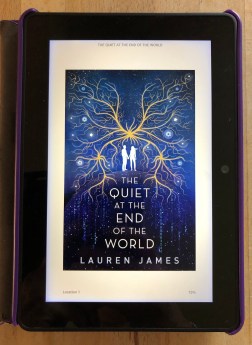
This week I have chosen All Quiet at the End of the World by Lauren James, from the YA Book Prize Shortlist 2020. This is a dystopian fiction set in the future that explores not only the existential crisis of humanity, but the very nature of what it means to be human.

Inspired by Carlo Rovelli’s Seven Brief Lessons on Physics, who states that ‘I believe that our species will not last long’. All Quiet at the End of the World runs with Rovelli’s thread that ‘we belong to a short-lived genus of species’ and that ‘the brutal climate and environmental changes which we have triggered are unlikely to spare us’.

These themes could make for heavy reading combined with the premise of a virus that stops fertility in humans. However, the narrative, set in London, is firmly about Lowrie (16 years old) and Shen (17 years old), their relationship with each other, their parents and their responsibility to world as the youngest remaining humans. Born from frozen eggs seventy years after the virus, in the time of sterility, they are waiting for scientists to find a cure. Themes of environmental action, a previously unknown virus, quarantine, waiting for a cure are never more pressing than in the current Covid-19 environment for not only a YA, but for an adult audience.

The narrative takes the form of a dual storyline and opens in the past when the virus first emerged with a call log for Maya Waverley to the emergency services. The narrative skips eighty-five years and is written in the first person from Lowrie’s point of view, as she and Shen explore the London underground with her Dad (a horticulturist). Lowrie finds Maya’s purse in an abandoned tube ‘the purse flops open, revealing rows of plastic cards’ and thus the scene is set for the link between the two narratives.

Lowrie and Shen are teenage explorers, detectives and scientists who try to unravel what has happened over the decades since the virus. Shen (from China, deaf in one ear and afraid of rats) is presented as being ‘the best at intellectual things’ but for Lowrie, ‘fixing stuff is my speciality’. Through their mudlarking they find and document pieces that are buried in the Thames and anywhere they can explore and is shown in a log at the beginning of each chapter. Their parents work together to teach them all they will need to know to survive in this new world.

Their futuristic world is defined with reference to bots who ‘keep things safe’ specifically ‘Mitch’ who befriends Lowrie and Shen and is describes as having ‘spindly metal legs’ that ‘have sprouted out of the robots rusted spherical body’.

Maya’s story is told through Lowrie’s research from what is left of Maya’s social media feeds where Maya revealing her feelings: ‘So much for feeling calmer! Today I can’t stop showering and showering, trying to get the virus off me’ and identifying a post virus world: ‘that was my first day of our new normal’ as well as her fears ‘I’m still having nightmares about the virus’. Maya attaches new items in her feed: ‘NEWSBREAKING.com: Doctors report Drop in Women Conceiving’, providing an external eye on the changing situation due to the virus.

The conflicting feelings of being a teenager are explored as Lowrie questions her sexuality, ‘I might be maybe probably definitely bisexual’ as well as and her attraction to Shen, ‘I find myself eyeing his forearms again’. The need to get away from her parents and experience independence also raises conflicting feelings, ‘now that we’re finally independent, I just miss him terribly’.

All Quiet at the End of the World questions evolution and what it means to be human. The extinction of humanity, climate change, the restoration of eco systems, prejudice and the ethics of assisted suicide are all seen through the love story of Lowrie and Shen. It is told in simple language, ‘I fill my utility belt with the essentials – a penknife, screwdriver, chisel and spanner’ that affirm Lowrie’s voice and power.

Themes: love, death, climate change, pandemic, nature of humans, existence, existential crisis, independence, parent-child relationships, bullying, prejudice, sacrifice.


All pictures and writing are my own unless otherwise credited. Permission must be obtained before any image reproduction and credit must be issued in any image reproduction or quotations. 


Blog, Creative Shorts, New Writing

Natodola


IMG_5357

It was a biting mid-winter day. The journey began, clear and cold, as the train left London, but as it cut through the countryside, the skies clouded and by the time it arrived by the coast in north Wales, there was a sharp wind and an unrelenting slashing rain that came from black and blue thunder clouds.

The taxi driver looked away as Celebes exited the train station. She pulled her hood up and tapped on the window.  Begrudgingly, he lowered the window enough for her to say, ‘Natadola please’. He grunted, hit a button and the boot opened. Celebes let her one large suitcase drop into the boot with a thud, then lowered her backpack letting it slide in next to the dirty wheels.

The taxi was freezing, and the driver wore a coat buttoned up so high to his nose and a hat pulled down so close to his eyes that she couldn’t imagine how he could safely drive the car. Mum would not have approved. The driver tore through the countryside and puddles splashed up over the windscreen, the wipers not fast enough to clear the water as the taxi moved blindly through the narrow roads.

He turned down a wooded lane and came to an abrupt stop outside a large gate. Celebes sighed and said under her breath, ‘Christmas with Grandma Sia at Natadola’. It was clear that the driver was not going any further. Celebes could not remember exactly how far the Natadola was from the gate but if the driver would not go any further, she had no choice but to walk. Hauling her luggage out of the boot, she paid the driver and watched as he did a messy three-point turn that her driving instructor would have failed. The driver did not want to be here anymore than she did.

The black iron gate had rusted, and ivy grew wild up the large stone posts. A gargoyle sat on top of each post, resting on their haunches ready to pounce. Their stone eyes followed every movement.

Celebes approached the gate, pulling the case over the thick veins that crossed the pathway. She lifted the latch and pushed the gate wide enough to pass through.

The hill up to Natadola was steep. The closer she came to the clearing, the more the rain had eased to a misty drizzle. Seagulls squawked and circled above as she emerged from the wood. The top of the house, Natadola, was ahead.

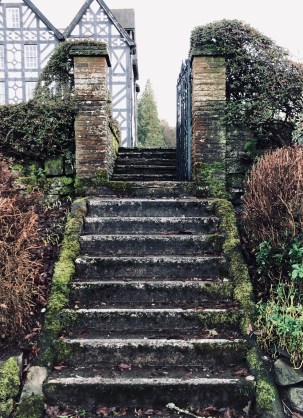
There was no direct entrance for cars. No driveway to the front door. No dropping off point. Only side paths and roads. Celebes approached the house from the left side and stopped in front of the stone steps that led to the front of the house. Steep and narrow, moss grew along both sides the steps. The skeleton plants that grew along the bank did not offer any sense of welcome. About halfway up the steps, there was a small landing with two pillars of red brick and a smaller iron gate. Celebes balanced the suitcase on the last step and pulled the gate open. It scraped a well-worn track on the stone, and as she ascended the final few steps, Celebes pushed her hood back and Natodola came into full view.


All pictures and writing are my own unless otherwise credited. Permission must be obtained before any image reproduction and credit must be issued in any image reproduction or quotations. 


Bedside Table Reads, Blog

Longlist Read: How Much of These Hills is Gold


IMG_7018

Hello!

How Much of These Hills is Gold by C Pam Zhang, from the Booker Prize Longlist 2020, is my book choice this week. It is a story of two orphaned native-born Chinese sisters, Lucy (12) and Sam (11), set in the wake of the California gold rush and their journey to bury their deceased father and search for home.

The narrative is written in the present tense immersing the reader into the action and creating a sense that we are living it along with Lucy and Sam. Using simple prose, it is divided into four parts. Parts One and Two are written in the third person and opens when ‘Ba dies in the night, prompting them to seek two silver dollars.’ And a few pages later we learn they are alone as ‘And long gone, Ma.’ The death of Ba sets the sisters on a journey to bury him.

The backdrop of the wild west in the 1800’s subverts expectations of white cowboy protagonists. The writing feels YA initially: with both parents removed from the narrative through death in the first few pages of the story, the sisters are propelled on their adventure. However, knitted in the simple prose and initial YA feel, is the image of the two children trailing the corpse of their dead father in a crate through the desert. This morbid image contrasts a sense of black humour, where bits of the corpse fall off as it decays in the heat of arid plains, described by Lucy who realises that ‘the hand has not one but two missing fingers.’ This is furthered when she decides to preserve the body in salt, like a piece of meat, to rid it of maggots and flies: ‘Sprinkled over Ba’s body, the salt looks like ash.’

With a thematic feel of Steinbeck’s Of Mice and Men’s the American Dream, where George describes ‘a little house and a couple of acres’ and Lennie’s desire to ‘live off the fatta the lan’, Lucy and Sam are fully aware of Ba’s dream: ‘I’ve got my eye on a piece of land eight miles toward the ocean. Between two hills, forty acres.’

Layered within the narrative, Chinese tradition appears throughout, where the sisters search for two silver dollars to place over their father’s eyes ‘sending the soul to its final good sleep’. A sense of family and responsibility drives the sisters on their journey as Ba says, ‘Family comes first.’ Animal and insect imagery add texture to the layers with reference to: snakes, buffalos, horses, tigers, flies and maggots. The buffalo descriptions are particularly striking: ‘the skeleton rises from the earth. Like a great white island…they’ve seen buffalo bone in pieces along the wagon trail, but never whole.’

The narrative also explores a search for identity and home. Sam, androgynous, becomes the boy Ba never had and is ‘prized by a father who wanted a son’. As Lucy searches for ‘What makes a home a home?’ she also seeks an understanding of identity through appearance, location and language with realisations such as: ‘For the first time Lucy understands that the language Ma shared with them in bits and pieces, was only a child’s game’.

The narrative cleverly shifts to the first person in Part Three where Ba’s perspective reveals an adult version of past events and then switches back to the third person in Part Four, fast forwarding five years. The relationship between gold, salt, earth and the elements interplay and are linked with plums, blood and skull imagery. The Parts are identified with dates (XX62, XX59, XX42/XX62, XX67) indicating the actual year (1862, 1869, 1842/1862, 1867) but also potentially representing any year creating a sense of timelessness to the narrative.

This coming of age story of Lucy and Sam takes the reader on a meandering journey through savage events, vast sorrow and parched deserts but it also through personal sacrifice, belonging, family and hope. How Much of These Hills is Gold sets out a new vision of the immigrant experience in forming the history of the American West.

Themes: coming of age, American Dream, heritage, tradition, death, loneliness, family, parent-child relationships, sibling relationships, gender, identity, sacrifice, loss, hope


All pictures and writing are my own unless otherwise credited. Permission must be obtained before any image reproduction and credit must be issued in any image reproduction or quotations. 


Blog, Creative Shorts, New Writing

To The Tower

IMG_4255

Lucy crept along the rough stones of the arrow loop. The light illuminated the stone wall but was blinding the closer she came to the narrow slit. The space was narrower than she thought towards the end; it was just big enough for her slim body. She had no idea how a grown man fit in the arrow loop to rain arrows down at the enemy. She paused, squatted down and leaned her head towards the opening as she lifted her skirt up and pushed it backwards. She squeezed in further.

‘What do you see? What do you see?’ her Clem asked from behind her.

‘Will you be quiet for just a minute.’ Lucy said craning her neck further towards the light.

‘Are they coming? They’re going to kill us all, aren’t they?’ Clem began to pace and down the walk between the castle walls, clenching and unclenching his hands.

‘I can’t…I can’t see enough.’ Lucy said.

‘They’ll break in…maybe from underground. Or swim the moat. Scale the batter at the bottom of the castle wall, shimmy up the stones and over the top and onto the wall walk and then boom…arrow after arrow…they’ll take down every defender until they get to us and…’

‘Will you stop talking. I can’t hear.’ She said calmly.

Clem stood still with his hands behind his back like his father, like he was in control. He looked down at the stones and counted them from one side of the wall to the other as his mother told him when he felt the panic rising. He had wished he had taken a knife from the kitchen and looped it in his belt like the men, but when he went to put his arm out, it froze to his side as if it was tied to his body with the strongest leather.

‘Nothing. There is no one attacking from this side of the castle. It must be from the other side.’ Lucy said as she crept backwards.  Stepping down on to the walkway, Lucy stood up straight and said, ‘Come on. Let’s run to the other side.’

Lucy grabbed Clem’s hand, her twin and Gemini, alike in many ways except she was older, but only by a minute or two which gave her a commanding nature. She was stronger, but only because she was taller. She was quicker, but only because she practiced racing against the fastest soldiers when she was allowed. She pulled him along the castle walkway. Lucy loved this part of the castle was because instead of filling the whole space in between the walls with rubble, they build a walkway halfway up, so you travel all around the castle walls and still be inside and access to the first level of arrow loops. Most of the men went up to the walk at the top of the castle to prepare for the attack. But a few stayed back and took up positions near Lucy and Clem.

A door crashed open behind them. Stopped abruptly, they held their breath and waited for the arrows to pierce their backs. Nothing. Strong fingers curled around their necks.

‘Lady Lucinda and Prince Clement. What do you think you’re doing?’ The hands shook their bodies and their heads wobbled in a strange detached way.

‘Nurse!’ They said in unison relieved and frightened at the same time. Clem was sure that being captured by the enemy would be far better than being caught by Nurse.

‘Nurse indeed. Your Mother will have your heads if you two are not upstairs in the tower immediately.’

Nurse pushed them through the door and up several flights of steps. Screams came from below. As they reached the tower, the noise below grew faint, and Nurse let go of them long enough unlock the large oak door to the top tower room with the key that always hung from her skirt.

‘Hurry.’ She said stepping aside.

They crossed the threshold. Mother turned to greet them, a sword in each hand.


All pictures and writing are my own unless otherwise credited. Permission must be obtained before any image reproduction and credit must be issued in any image reproduction or quotations. 


Bedside Table Reads, Blog

First Shortlist Read

Hello!

IMG_9638

The YA Book Prize 2020 Shortlist and The 2020 Booker Prize Longlist have been announced and it’s that time of year to get reading. My bedside table and Kindle are stacked up and ready to go!

My first read, Meat Market by Juno Dawson, is from the YA Book Prize 2020 Short List about the fashion industry, its attraction and iniquitous underbelly.

Meat Market follows the journey of sixteen-year-old Jana Novak (an average teenager from an estate in London) through the treacherous world of modelling. Scouted at Thorpe Park for her androgynous looks and height, Jana is propelled into a whirlwind of fashion shoots, travelling and worldwide fashion weeks. Forced to choose between the lure of money through modelling and sixth form college, Jana opts for the former and embarks on a journey that takes her further and further away from her family, friends and herself. Her friends Sabah, Laurel and boyfriend Ferdy (Kai Ferdinand) oscillate in and out of Jana’s life initially keeping her grounded in reality, but as the novel progresses the distance between them grows as does Jana’s dependence on anti-anxiety medication and sleeping tablets.

Dawson systematically cuts away the glamour of the fashion industry and life of the models exposing raw truths: long hours, grotty accommodation, jet lag, eating disorders, drug abuse, sexual abuse and the dehumanising effect of the industry.

You would expect the novel to follow an arc of doom and gloom with our protagonist, Jana, self-destructing. However, the journey Dawson takes us on is one of hope, with Jana finding courage, strength, friendship and most importantly, herself, as well as exposing the fashion industry’s darkest secrets.

Written from the first-person point of view, we have an intimate knowledge of Jana’s life, her loneliness and confusion. This is enhanced by alternating the first-person narrative of past events with short interviews in the present. The opening interview of the book:

‘ – What am I supposed to say?’

‘ – Well, why did you want to make this film?’

‘ – It’s time, I think.’

sets the scene for the first-person narrative to catch up to this moment. The narration is interspersed with texts, newspaper articles and a celebrity review providing the reader a momentary opportunity to observe events from an outside perspective creating a concrete link to the real world. Our world. This makes the events feel not only tangible but frighteningly realistic. Reference to specific magazines, locations in London and around the world anchor the story in reality. Jana’s voice is clear, distinct and entirely relatable with Dawson capturing the essence of a London teenager through both dialogue and internal monologue. Jana’s opening thought, ‘Why are men such trash?’ is simple and brutal establishing the foundation on which Dawson builds her story.

Dawson’s gaze on the modelling industry in Meat Market is a call for greater regulation to safeguard the health and safety of models around the world.

Meat Market is a great read to kick start the nominations. The rest of the YA Book Prize Shortlist 2020 has a lot to live up to – very much looking forward to reading another from the list!

Key themes: identity, mental health, abuse, power, ethics, drugs, money, vulnerability, glamour, loneliness, courage, friendship and love.


All pictures and writing are my own unless otherwise credited. Permission must be obtained before any image reproduction and credit must be issued in any image reproduction or quotations.